City of HarrodsburgTree Board

Tree resources

Native and invasive trees of Kentucky

Which trees to plant in Harrodsburg, and which invasive trees to recognize, avoid and replace.

Why plant native trees

Trees that evolved here are suited to Kentucky's climate, soils and seasons, and they support the insects, birds and other wildlife that depend on them. Choose a tree for its size when grown, not its size at the nursery: look at the space above and around the spot before you plant. Invasive trees do the opposite of natives. They spread into fields, woods and roadsides and crowd out the plants that belong there.

Planting and care tips

Native trees to plant

Large trees

Usually more than 50 feet tall

Long-lived shade trees. Give them room to grow, well away from buildings and overhead lines.

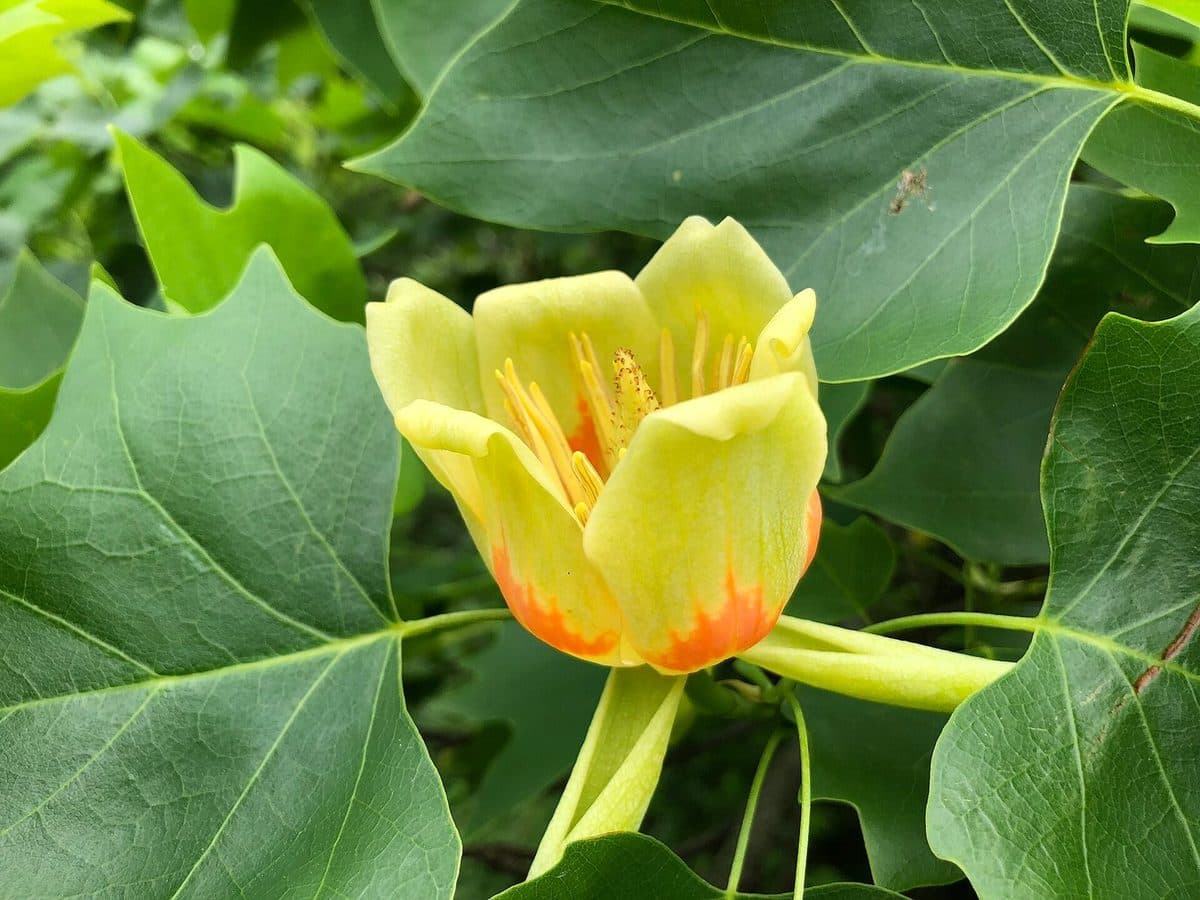
Tulip poplar flower, a cup of pale yellow-green petals with an orange band, among squarish four-lobed leaves
Photo: Famartin, CC BY-SA 4.0

Tulip poplar

Liriodendron tulipifera · Also called Tuliptree, Yellow poplar

60–90 ft tall · 30–50 ft wide

Kentucky's state tree, and one of the largest trees in the eastern United States. A fast-growing shade tree for big yards and parks.

  • Shade
  • Wildlife
Look for
  • Four-lobed leaves with a squared-off tip
  • Tulip-shaped yellow flowers with an orange band, in spring
  • Tall, straight trunk
  • Golden yellow fall color
Where it grows best

Needs full sun and deep, moist, well-drained soil; it tolerates clay and alkaline soil but is sensitive to drought.

Wildlife

Its flowers give nectar to ruby-throated hummingbirds and butterflies, and squirrels eat the seeds in fall and winter.

Good to know

Fast growth makes the wood weak, so limbs can break in wind and ice; it is generally not recommended as a street tree.
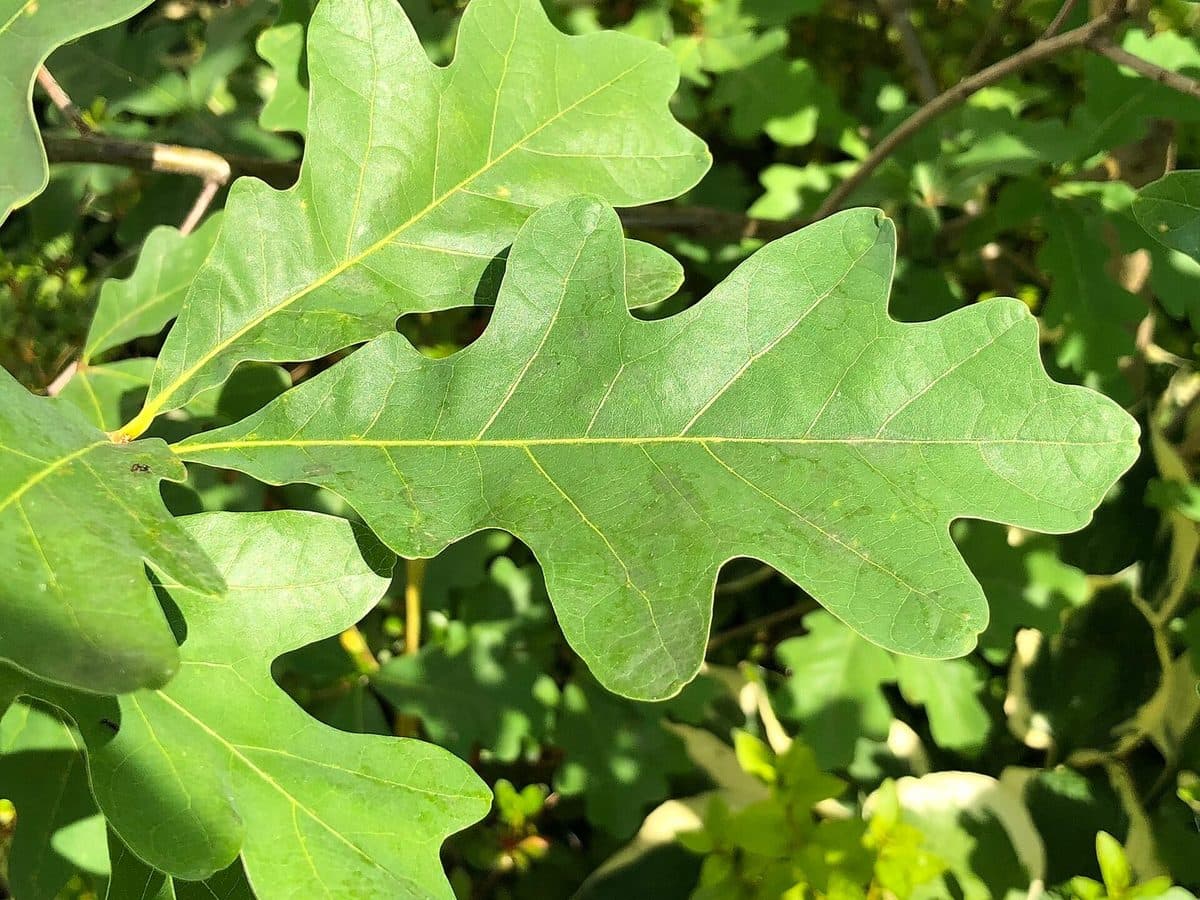
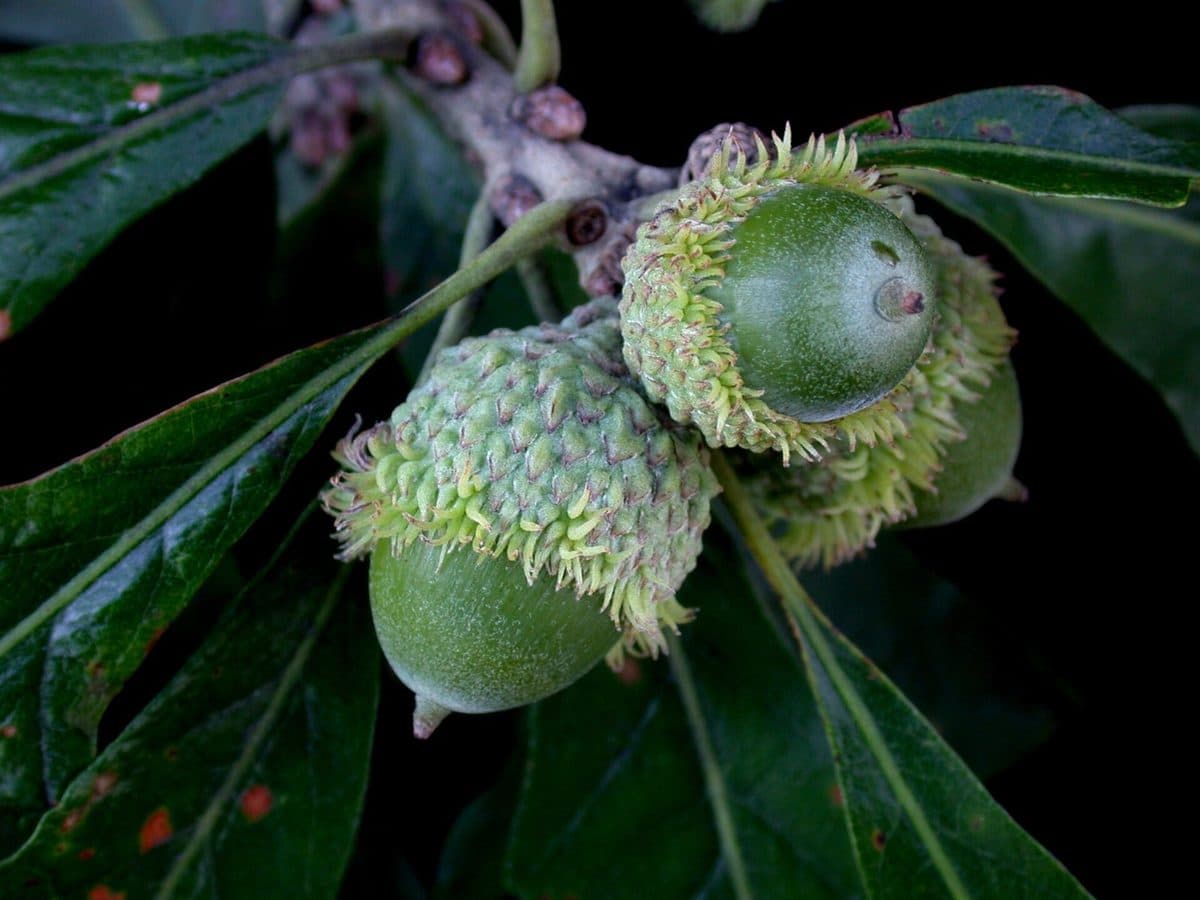
White oak leaves with rounded, finger-like lobes, bright green in summer
Photo: Famartin, CC BY-SA 4.0

White oak

Quercus alba

50–80 ft tall · 50–80 ft wide

A long-lived oak with a wide, rounded crown, and a key timber tree for Kentucky's bourbon barrels. Plant it where it will have room to grow for generations.

  • Shade
  • Dry sites
  • Wildlife
Look for
  • Leaves with 7–9 deep, rounded lobes
  • Acorns about 3/4 inch long with a warty cap
  • Light ash-gray bark
  • Fall color ranges from brown to deep red
Where it grows best

Full sun; it grows best in deep, well-drained, slightly acidic soil but adapts to many soils, including clay, and does not tolerate wet ground.

Wildlife

Its acorns are an important food for deer, squirrels and wild turkeys, and its leaves feed caterpillars such as the imperial moth.

Good to know

It grows slowly and is hard to transplant because of its taproot, and its roots are easily harmed by soil compaction and construction.

Two bur oak acorns in deep cups edged with a shaggy fringe, among dark glossy leaves
Photo: Gilles Ayotte, CC BY-SA 4.0

Bur oak

Quercus macrocarpa · Also called Burr oak, Mossycup oak

60–80 ft tall · 60–80 ft wide

A tough, long-lived oak with a broad, spreading crown and very large acorns. Ancient bur oaks are part of the historic Bluegrass landscape, and Lexington named it its official city tree in 2018.

  • Shade
  • Street tree
  • Dry sites
  • Wildlife
Look for
  • Large leaves, up to 10–12 inches long, deeply cut near the middle
  • Acorns up to 1 1/2 inches long with a fringed, mossy cap
  • Fall color is yellow-brown
Where it grows best

Full sun; it adapts to many soils and tolerates alkaline soil, clay and drought.

Wildlife

Bur oak hosts more than 500 species of moths and butterflies, and its acorns feed deer, squirrels and wild turkeys.

Good to know

It needs a very large space, and young trees can take up to 35 years to bear their first acorns.

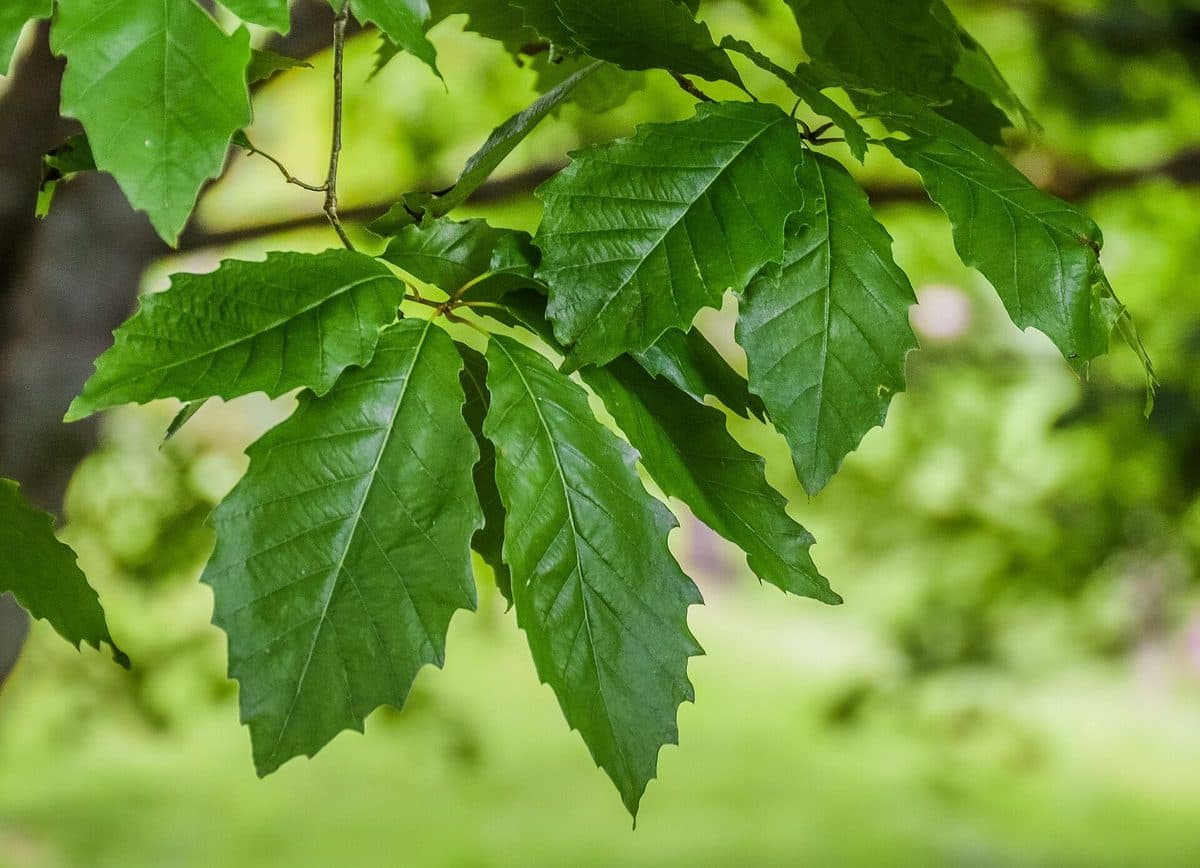
Chinkapin oak branch with glossy, narrow leaves edged in regular pointed teeth
Photo: Krzysztof Golik, CC BY-SA 4.0

Chinkapin oak

Quercus muehlenbergii · Also called Chinquapin oak, Yellow chestnut oak, Yellow oak

40–60 ft tall · 50–70 ft wide

An oak of limestone soils, and one of the notable ancient trees of the Bluegrass. The Morton Arboretum calls it one of the best oaks for alkaline soil.

  • Shade
  • Dry sites
  • Wildlife
Look for
  • Narrow leaves with coarse, even teeth, like a chestnut leaf
  • Small acorns, up to 3/4 inch, that are sweet rather than bitter
  • Open, rounded crown
  • Fall color is usually yellow to brown
Where it grows best

Full sun in well-drained soil; in the wild it grows on limestone and on weakly acidic to alkaline soils, and it tolerates drought and clay.

Wildlife

Its sweet acorns are eaten by squirrels, chipmunks, deer, wild turkeys and other birds.

Good to know

It is less widely planted than other oaks, so it may take some searching to find, and trees can take up to 30 years to bear acorns.

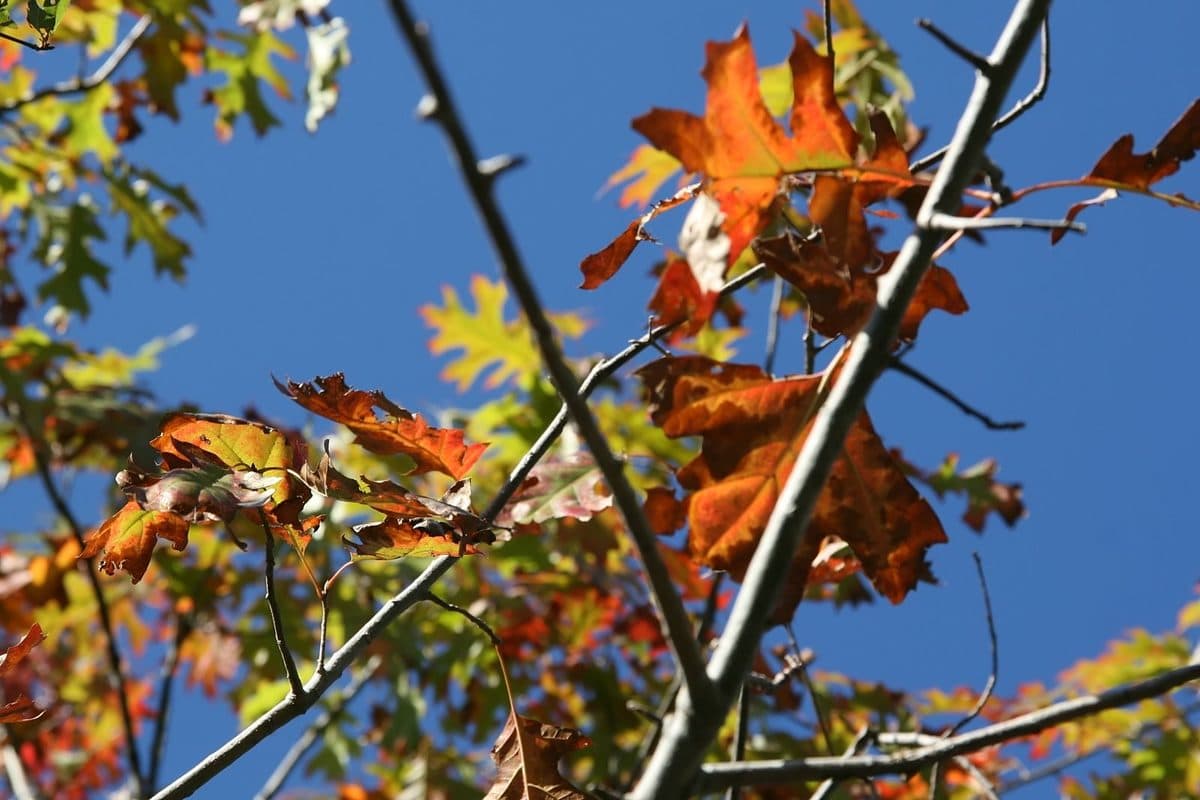
Shumard oak leaves turning orange-red in autumn, with pointed, bristle-tipped lobes against a blue sky
Photo: David J. Stang, CC BY-SA 4.0

Shumard oak

Quercus shumardii · Also called Swamp red oak

40–60 ft tall · 30–40 ft wide

A red oak with glossy leaves and red fall color that holds up well in town. UK's Urban Forest Initiative suggests it in place of pin oak.

  • Shade
  • Street tree
  • Fall color
  • Wildlife
Look for
  • Glossy, dark green leaves with 7–9 deep, bristle-tipped lobes
  • Red fall color that comes late in the season
  • Pyramid-shaped when young, spreading with age
Where it grows best

Full sun and well-drained soil; it handles both dry and wet sites, and the US Forest Service and Morton Arboretum list it as tolerant of alkaline soil.

Wildlife

Its acorns feed songbirds, wild turkeys, deer and squirrels.

Good to know

It can be hard to transplant and hard to find in nurseries, and like other oaks it can get oak wilt, so prune only when the tree is dormant.

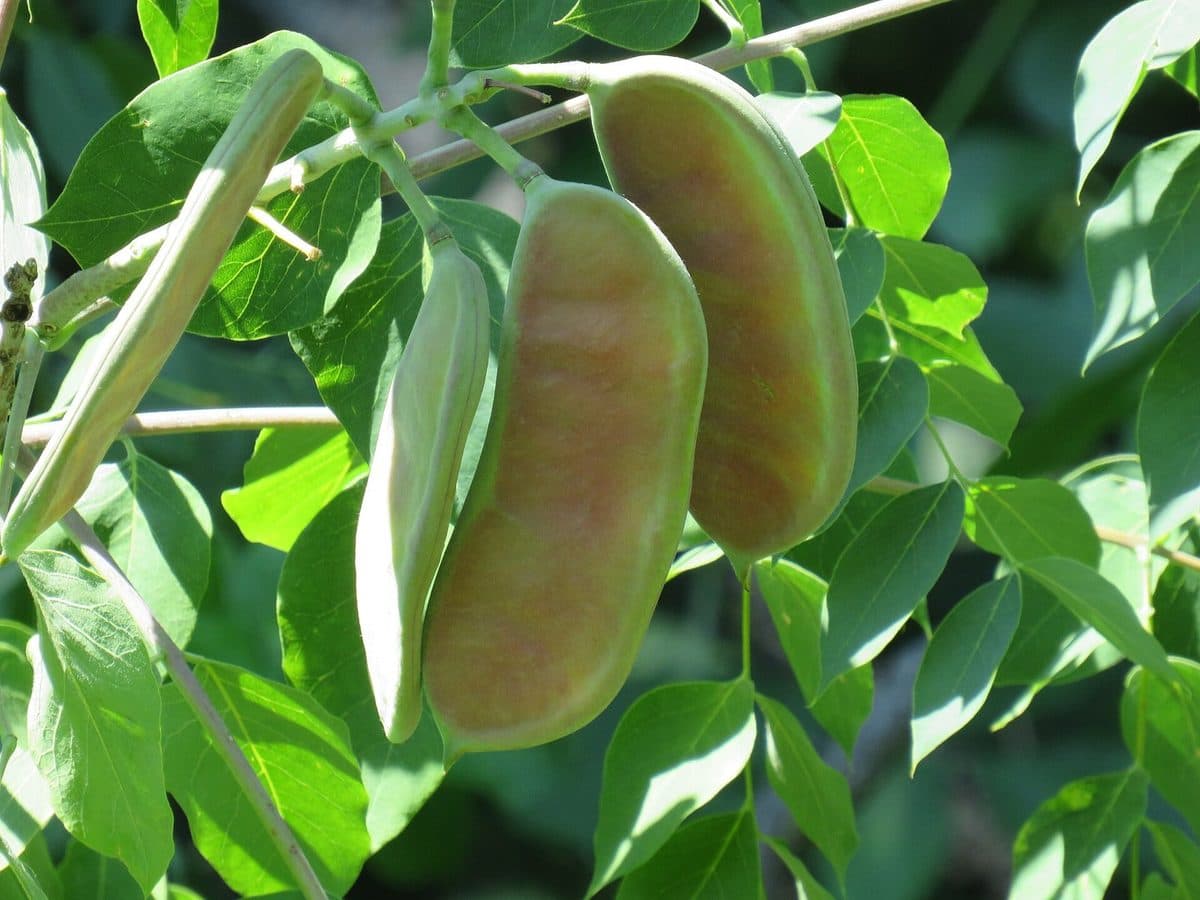
Kentucky coffeetree seed pods, thick green-purple beans, hanging among small oval leaflets
Photo: Lyudmyla Larioshyna, CC0

Kentucky coffeetree

Gymnocladus dioicus · Also called Coffeetree

60–80 ft tall · 40–55 ft wide

Kentucky's state tree until 1994, when it was named the state's heritage tree. A tough shade tree that copes well with city conditions.

  • Shade
  • Street tree
  • Dry sites
Look for
  • Very large compound leaves, up to 3 feet long, with small blue-green leaflets
  • Female trees bear thick, reddish-brown pods up to 10 inches long
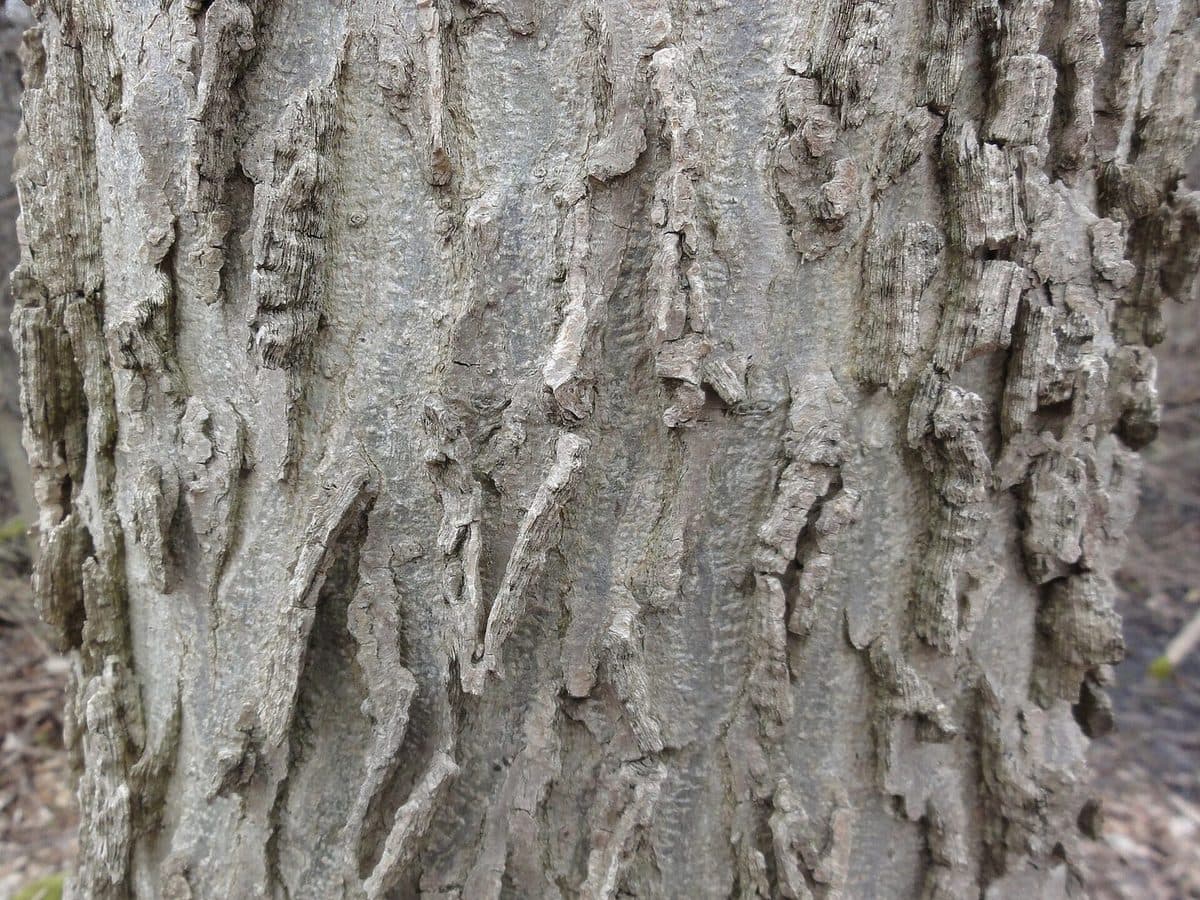
  • Rough, scaly gray-brown bark
  • Pale yellow fall color
Where it grows best

Full sun; it tolerates alkaline soil, drought and urban conditions, though the Missouri Botanical Garden advises avoiding heavy clay.

Wildlife

Few animals eat it because the seeds are toxic, but bumblebees and other insects pollinate the flowers and birds nest in its branches.

Good to know

Raw seeds and pods are poisonous, and pods from female trees create litter; male cultivars avoid both.

Hackberry trunk with grey bark broken into narrow, corky ridges
Photo: R. A. Nonenmacher, CC BY-SA 4.0

Common hackberry

Celtis occidentalis · Also called Hackberry

40–60 ft tall · 40–60 ft wide

A hardy, fast-growing shade tree found in almost every kind of setting across Kentucky. It stands up to drought, wind, poor soil and air pollution.

  • Shade
  • Street tree
  • Dry sites
  • Wet sites
  • Wildlife
Look for
  • Gray bark with corky, warty ridges
  • Rough leaves, 2–4 1/2 inches long, with a lopsided base
  • Small purple fruits that ripen in fall and hang on into winter
  • Yellow fall color
Where it grows best

Full sun to part shade; it tolerates alkaline soil, clay, dry or wet sites and road salt.

Wildlife

Cedar waxwings, robins and woodpeckers eat its fruit in winter, and it is a host plant for hackberry emperor and mourning cloak butterflies.

Good to know

Nipple galls on the leaves and witches' broom on twigs are common but mostly cosmetic, and fallen fruit can be messy near sidewalks.

Medium trees

About 25 to 50 feet tall

A good fit for most yards and many streets.

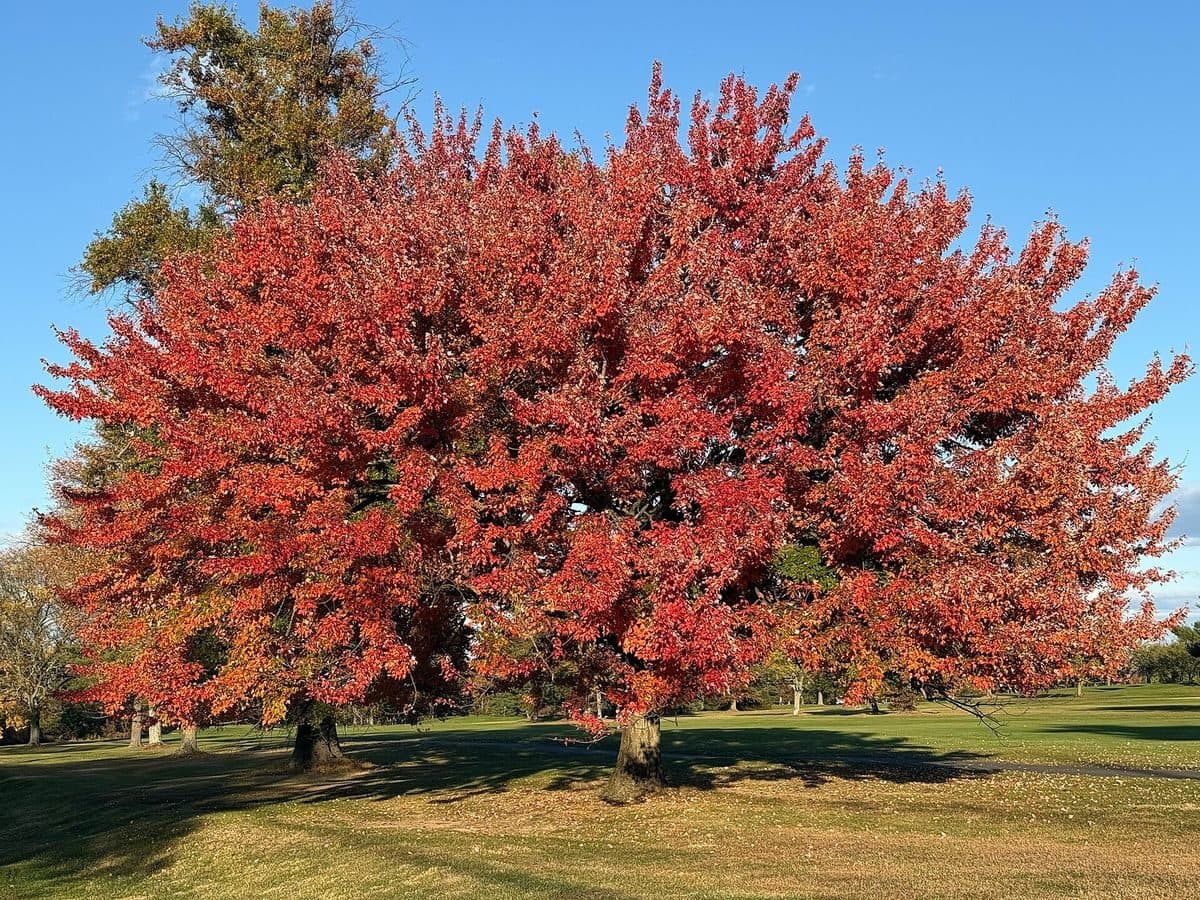
Red maple in autumn, its broad crown blazing scarlet and orange against a blue sky
Photo: Famartin, CC BY-SA 4.0

Red maple

Acer rubrum · Also called Swamp maple, Soft maple

40–70 ft tall · 30–50 ft wide

A fast-growing native maple with red flowers in early spring and red fall color. It adapts to both wet and dry sites.

  • Shade
  • Fall color
  • Wet sites
  • Wildlife
Look for
  • Leaves usually three-lobed, with toothed edges and red leaf stems
  • Clusters of small red flowers before the leaves come out
  • Winged seeds that spin to the ground in late spring
  • Fall color varies from yellow to brilliant red
Where it grows best

Full sun to part shade; it grows in wet or dry soil but prefers slightly acidic soil, and its leaves can turn pale (chlorosis) in high-pH soil.

Wildlife

Its early flowers are a nectar source for bees, and birds, squirrels and chipmunks eat the seeds.

Good to know

Its shallow roots can lift sidewalks and driveways if planted too close, and it is susceptible to verticillium wilt.

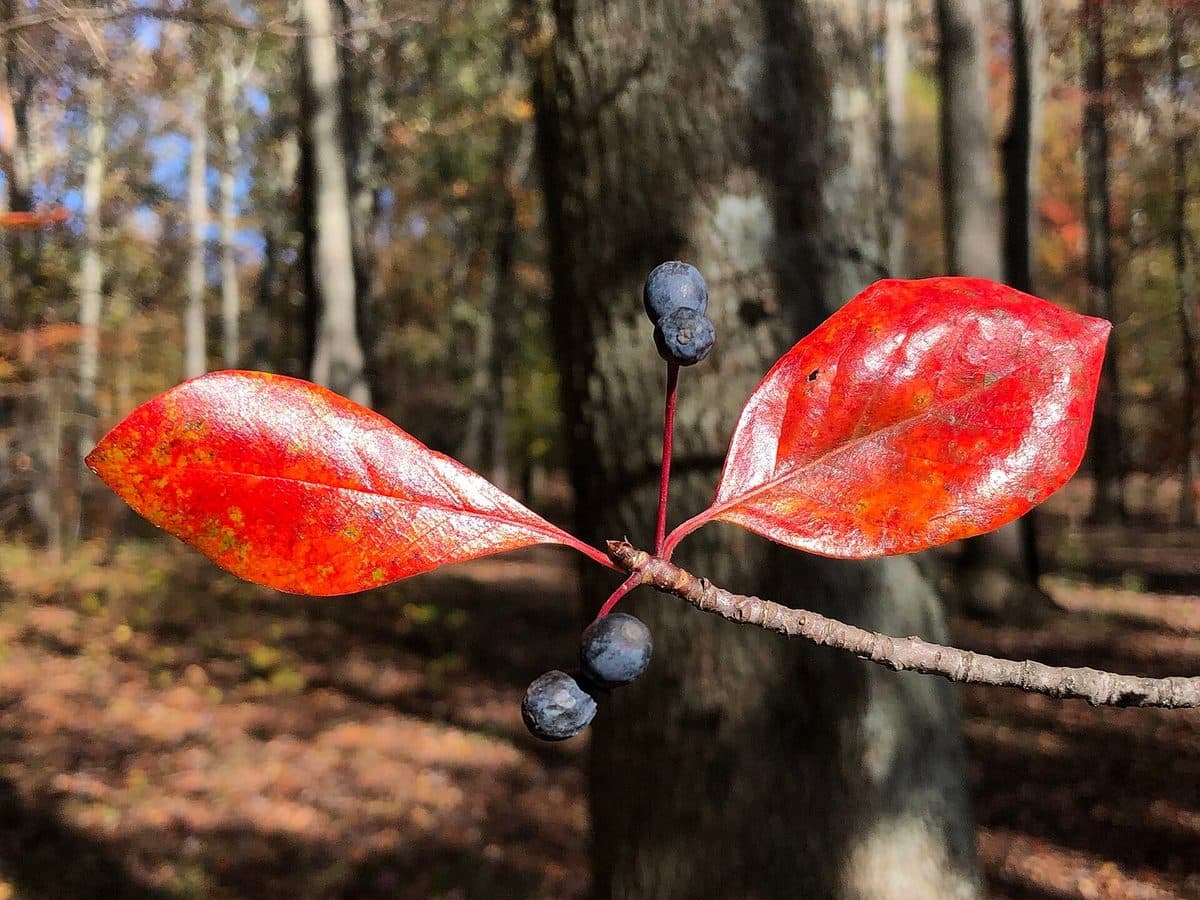
Glossy scarlet blackgum leaves in autumn beside small blue-black fruits on a twig
Photo: Famartin, CC BY-SA 4.0

Blackgum

Nyssa sylvatica · Also called Black tupelo, Sour gum

30–50 ft tall · 20–30 ft wide

A slow-growing native shade tree with brilliant red to purple fall color. It copes with heavy, poorly drained soils.

  • Shade
  • Street tree
  • Fall color
  • Wet sites
  • Wildlife
Look for
  • Glossy, dark green oval leaves up to 5 inches long
  • Scarlet to purple fall color
  • Small dark blue fruits on female trees
  • Straight trunk with horizontal branches
Where it grows best

Full sun to part shade in moist soil; it tolerates clay and wet ground but prefers acidic soil and can yellow in high-pH soil, so test the soil first.

Wildlife

Its flowers are an excellent nectar source for bees, and birds eat the fruit.

Good to know

A long taproot makes it hard to transplant, so plant young trees, in spring.

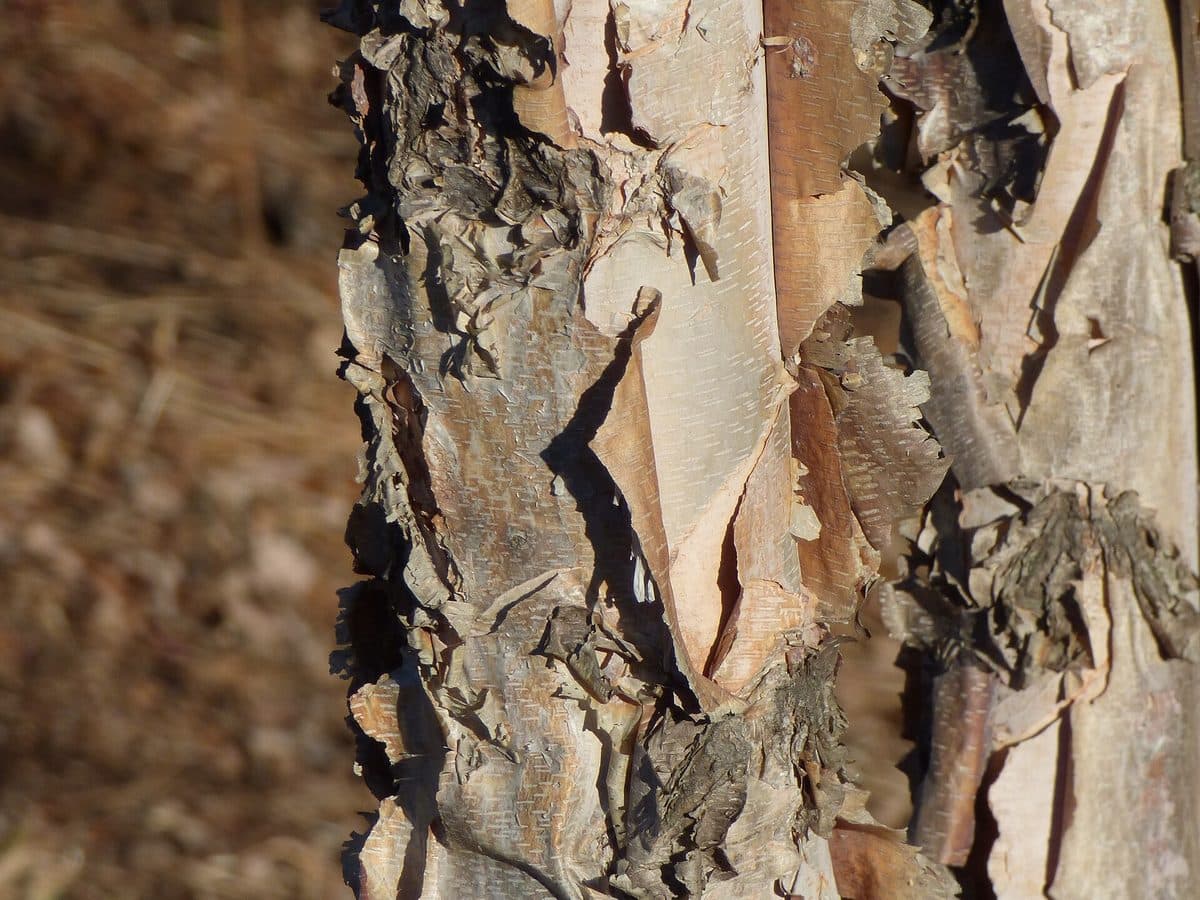
River birch trunk with papery tan and salmon-colored bark curling away in layers
Photo: Greg Hume, CC BY-SA 4.0

River birch

Betula nigra

40–70 ft tall · 40–60 ft wide

A fast-growing birch with peeling, salmon-colored bark, suited to wet spots, rain gardens and stream banks. It resists the bronze birch borer that kills many other birches.

  • Shade
  • Wet sites
Look for
  • Salmon-pink to reddish-brown bark that peels in papery layers
  • Often grown with several trunks
  • Diamond-shaped leaves with double-toothed edges
  • Yellow fall color
Where it grows best

Full sun to part shade in moist to wet soil; it handles clay and occasional flooding, but its leaves often yellow (iron chlorosis) in high-pH soil.

Wildlife

The Morton Arboretum lists it as attracting songbirds, game birds, pollinating insects and small mammals.

Good to know

Iron chlorosis is common in alkaline soil, so test the soil before planting.

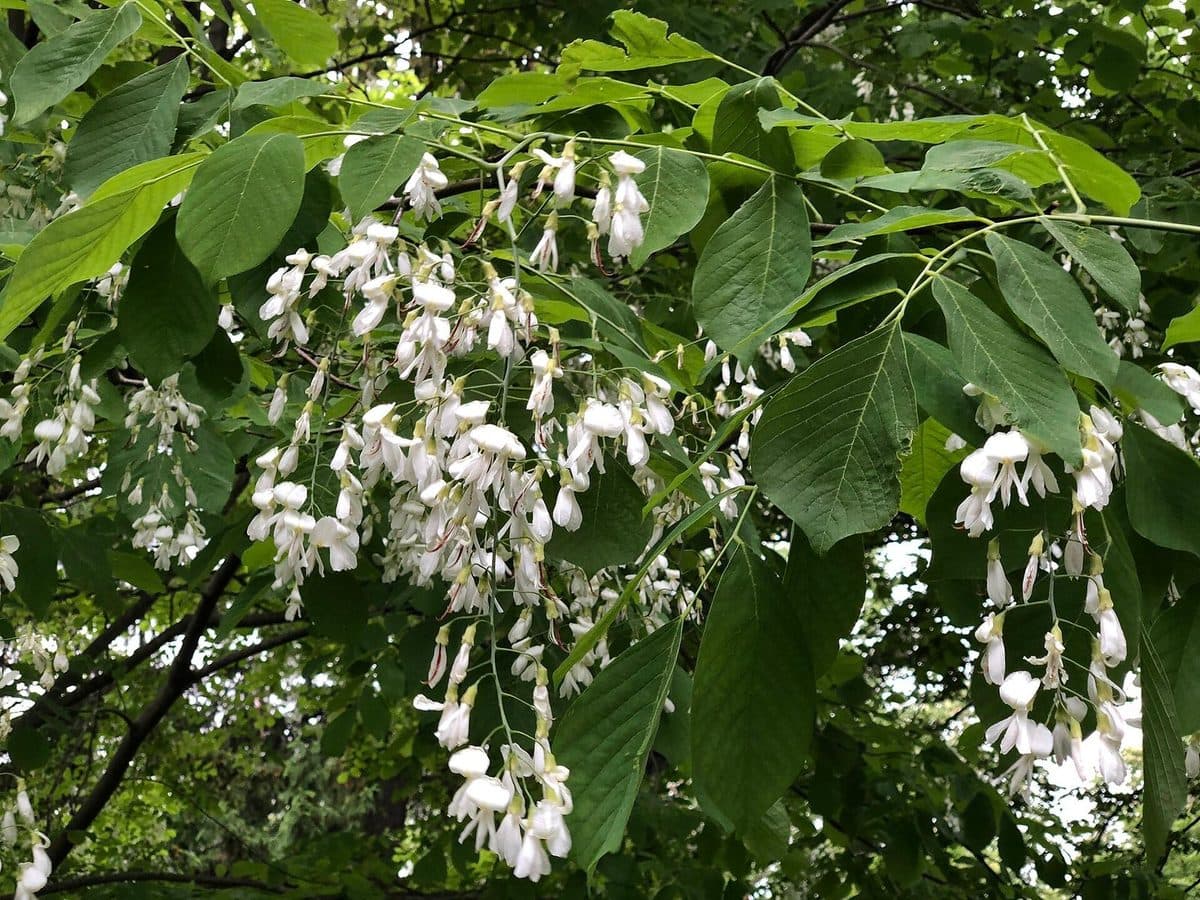
Yellowwood branch with drooping clusters of white pea-like flowers among compound leaves
Photo: Famartin, CC BY-SA 4.0

Yellowwood

Cladrastis kentukea · Also called American yellowwood, Kentucky yellowwood

30–50 ft tall · 40–55 ft wide

A rare native of the Kentucky River palisades in the Bluegrass that is now easier to find in local nurseries. It bears long, hanging clusters of fragrant white flowers in late spring.

  • Shade
  • Spring flowers
  • Fall color
  • Wildlife
Look for
  • Hanging clusters of fragrant white flowers, 10–15 inches long
  • Compound leaves with 7–11 leaflets that turn yellow in fall
  • Smooth gray bark
  • Heavy bloom often comes only every 2–3 years, and young trees may not flower for 8–10 years
Where it grows best

Full sun gives the best flowering; it grows on limestone in the wild and tolerates alkaline soil, clay and dry sites.

Wildlife

Bees and other pollinators visit the flowers, and songbirds use it for nesting.

Good to know

Branches break easily in ice and wind, so prune young trees for wide branch angles, and prune in summer to avoid heavy sap bleeding.

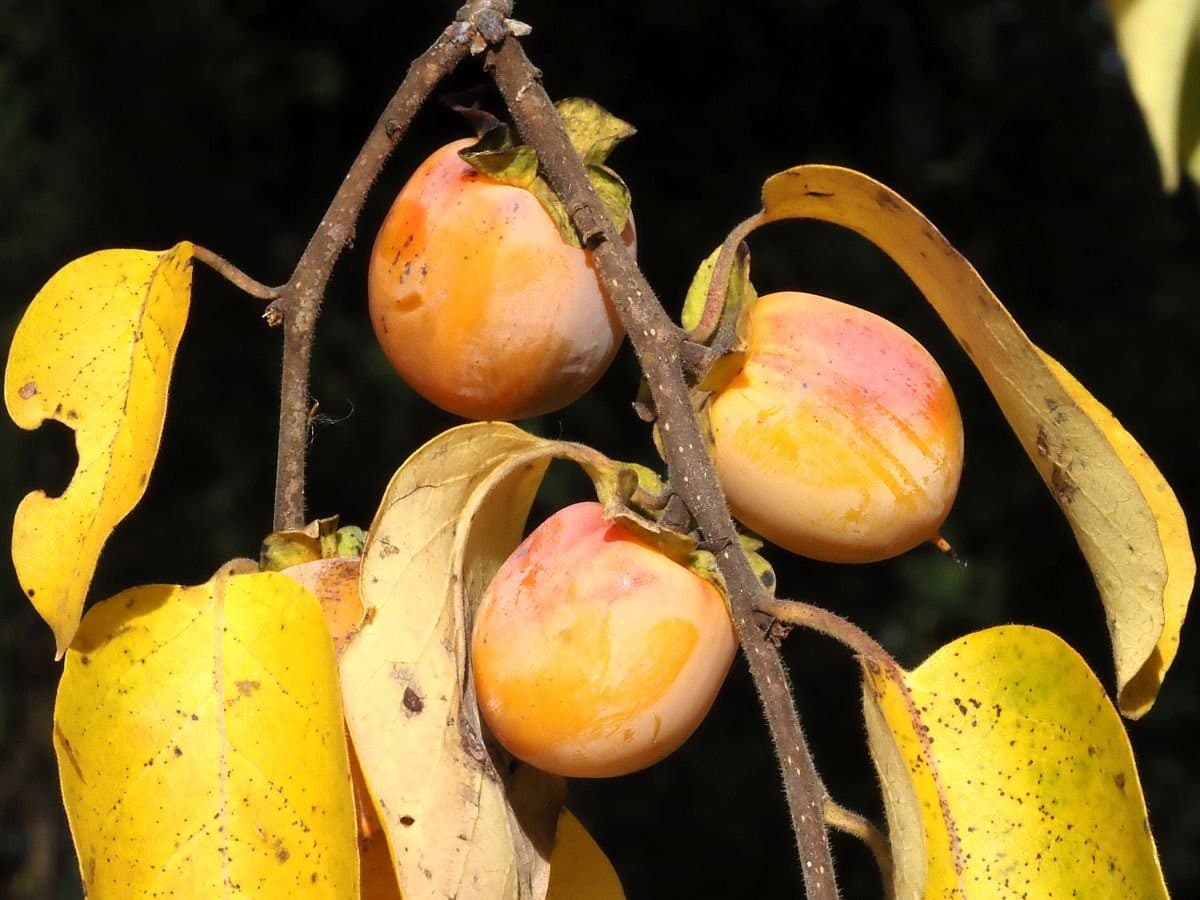
Three ripening orange persimmons hanging from a twig among yellow autumn leaves
Photo: Peterwchen, CC BY-SA 4.0

Common persimmon

Diospyros virginiana · Also called American persimmon, Possumwood

35–60 ft tall · 25–35 ft wide

A native fruit tree with distinctive blocky bark and orange fruit that turns sweet when fully ripe. It tolerates dry, clay and alkaline soils.

  • Dry sites
  • Wildlife
Look for
  • Dark, deeply furrowed bark broken into blocks, like alligator skin
  • Glossy, dark green oval leaves
  • Orange fruit up to 1 1/2 inches, bitter until fully ripe
  • Male and female flowers grow on separate trees
Where it grows best

Full sun to part shade; it tolerates alkaline soil, clay, drought and dry, rocky sites.

Wildlife

Deer, raccoons, opossums, foxes and more than 50 bird species eat the fruit.

Good to know

Only female trees bear fruit, and fallen fruit is messy; it also sends up root suckers and can be hard to find in nurseries.

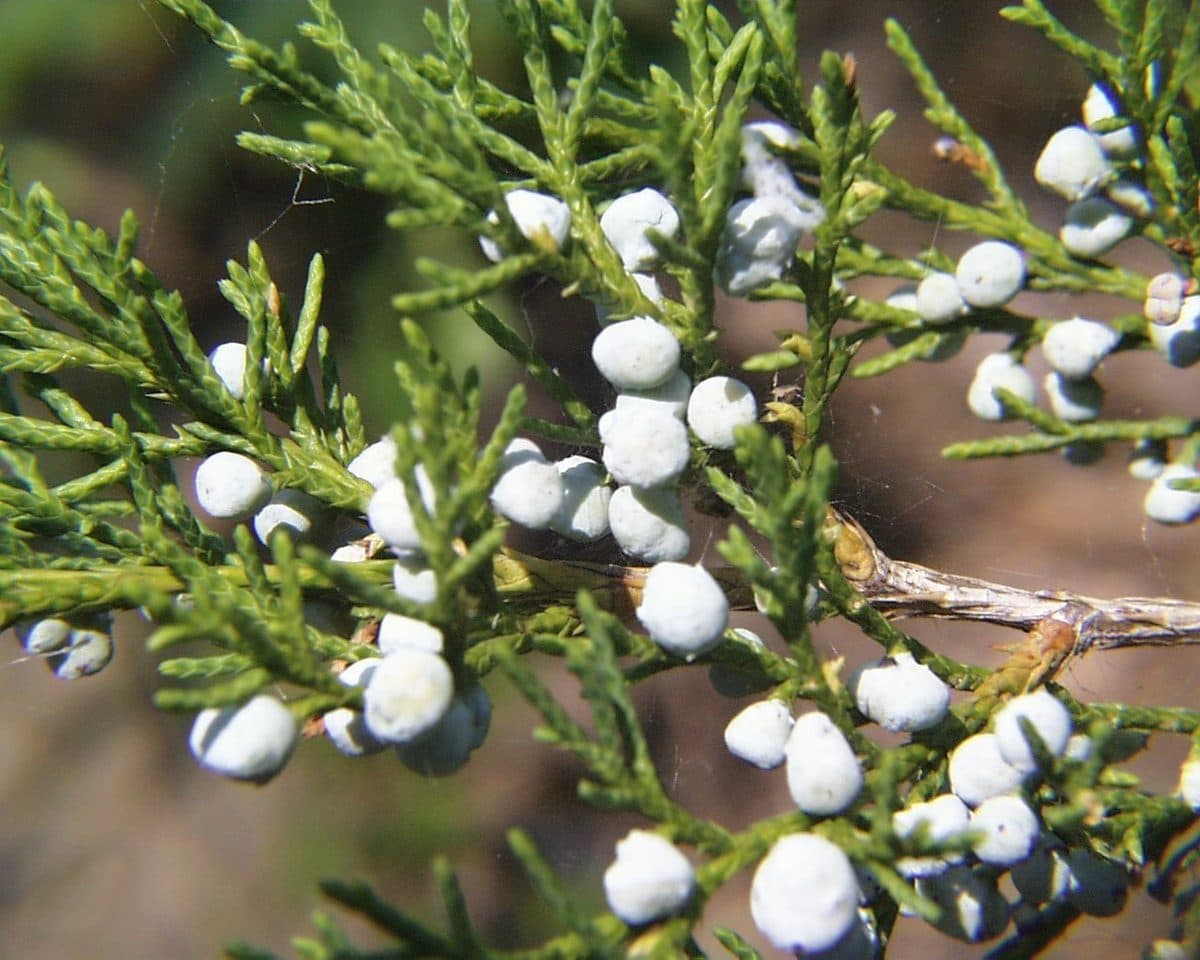
Eastern red cedar sprays of scaly green foliage dotted with frosty blue, berry-like cones
Photo: U.S. Fish and Wildlife Service, Public domain

Eastern red cedar

Juniperus virginiana · Also called Red cedar, Red juniper

30–65 ft tall · 8–25 ft wide

A tough native evergreen that grows on dry, rocky and limestone sites. It makes a year-round screen and feeds many birds.

  • Dry sites
  • Wildlife
Look for
  • Evergreen, scale-like foliage that can turn brownish-green in winter
  • Narrow, pyramid-shaped form
  • Small blue, berry-like cones on female trees
  • Reddish-brown bark that peels in long, thin strips
Where it grows best

Full sun; it tolerates alkaline, dry, rocky and poor soils, drought and road salt, but not constantly wet ground.

Wildlife

Birds, rabbits, foxes and raccoons eat the berries, which often last through winter, and deer browse the winter shoots.

Good to know

It is a host for cedar-apple rust, so avoid planting it near apple trees, and watch for bagworms.

Small trees

Usually under 25 to 30 feet tall

The choice for small yards, and the only kind to plant near overhead power lines.

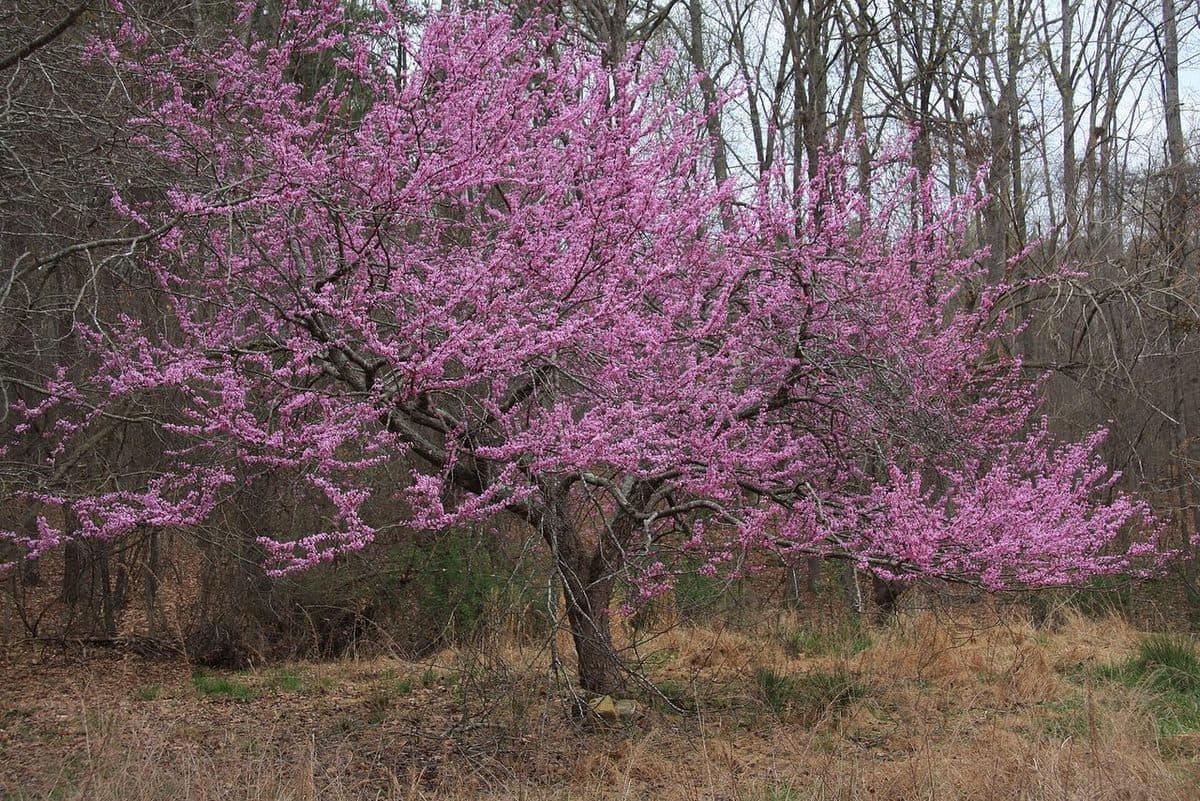
Eastern redbud tree covered in small pinkish-purple blossoms on bare branches at a woodland edge
Photo: Dcrjsr, CC BY 3.0

Eastern redbud

Cercis canadensis · Also called Redbud

20–30 ft tall · 25–35 ft wide

A small native tree covered in rose-purple flowers on bare branches in early spring. It fits small yards and spots near power lines.

  • Small yards
  • Near power lines
  • Street tree
  • Spring flowers
  • Wildlife
Look for
  • Rose-purple, pea-like flowers before the leaves come out
  • Heart-shaped leaves that turn yellow in fall
  • Flat brown seedpods that can hang on into winter
  • Often has several trunks
Where it grows best

Full sun to part shade in well-drained soil; it tolerates alkaline soil and clay but not wet or poorly drained ground.

Wildlife

Its early flowers are a nectar source for hummingbirds, and songbirds eat its seeds and flower buds.

Good to know

It is relatively short-lived, often 20–25 years, and is prone to canker and verticillium wilt.

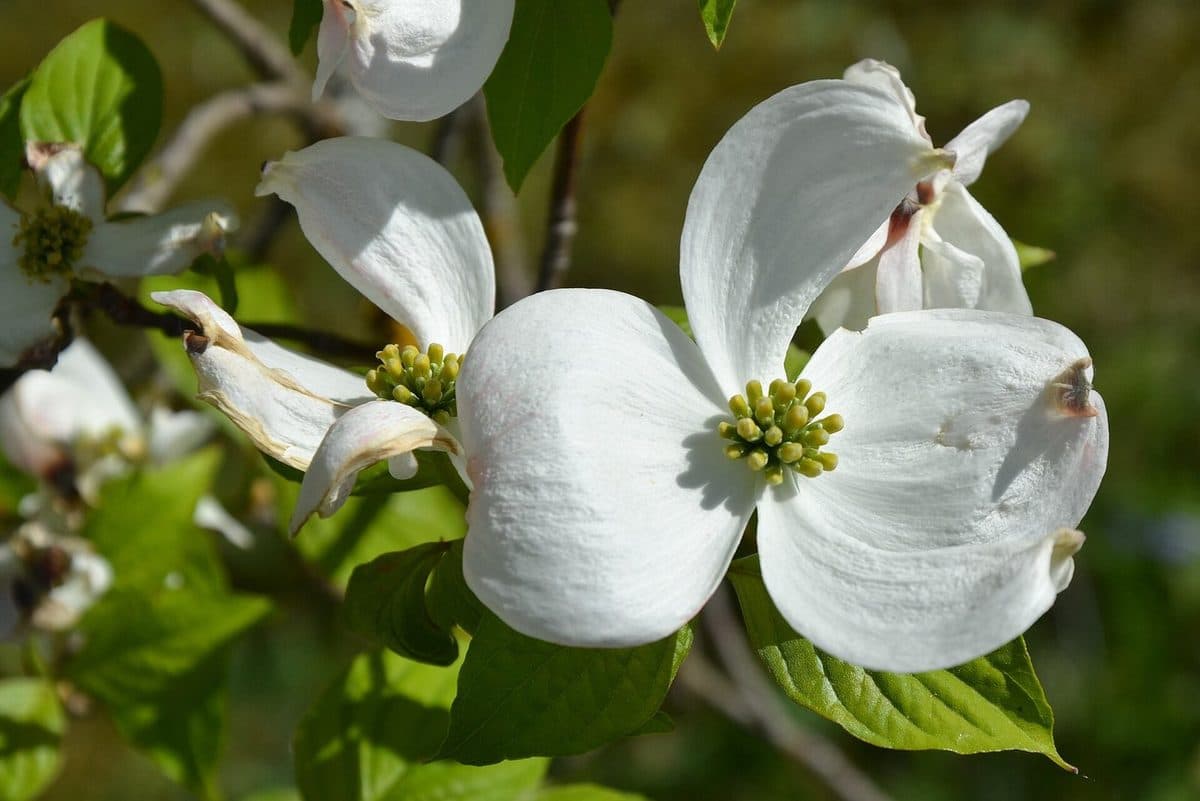
Flowering dogwood bloom: four white, notched bracts around a knot of small green-yellow flowers
Photo: Joanna Boisse, CC BY-SA 4.0

Flowering dogwood

Cornus florida · Also called Dogwood

15–30 ft tall · 15–30 ft wide

One of the most popular native flowering trees, with white spring blooms and red berries. It naturally grows in the forest understory and does best with some shade.

  • Small yards
  • Near power lines
  • Spring flowers
  • Fall color
  • Wildlife
Look for
  • Showy white "petals" in spring are really bracts around tiny true flowers
  • Bright red berries in late summer and fall
  • Red fall color
  • Bark broken into small, square scales
Where it grows best

Part shade in moist, well-drained, acidic soil high in organic matter; it struggles in heavy clay, high-pH soil, drought and harsh urban sites.

Wildlife

Robins, cardinals and cedar waxwings eat its highly nutritious berries, and bees visit the spring flowers.

Good to know

Dogwood anthracnose can kill trees, and stressed trees attract borers and other problems, so avoid hot, dry, compacted or alkaline sites.

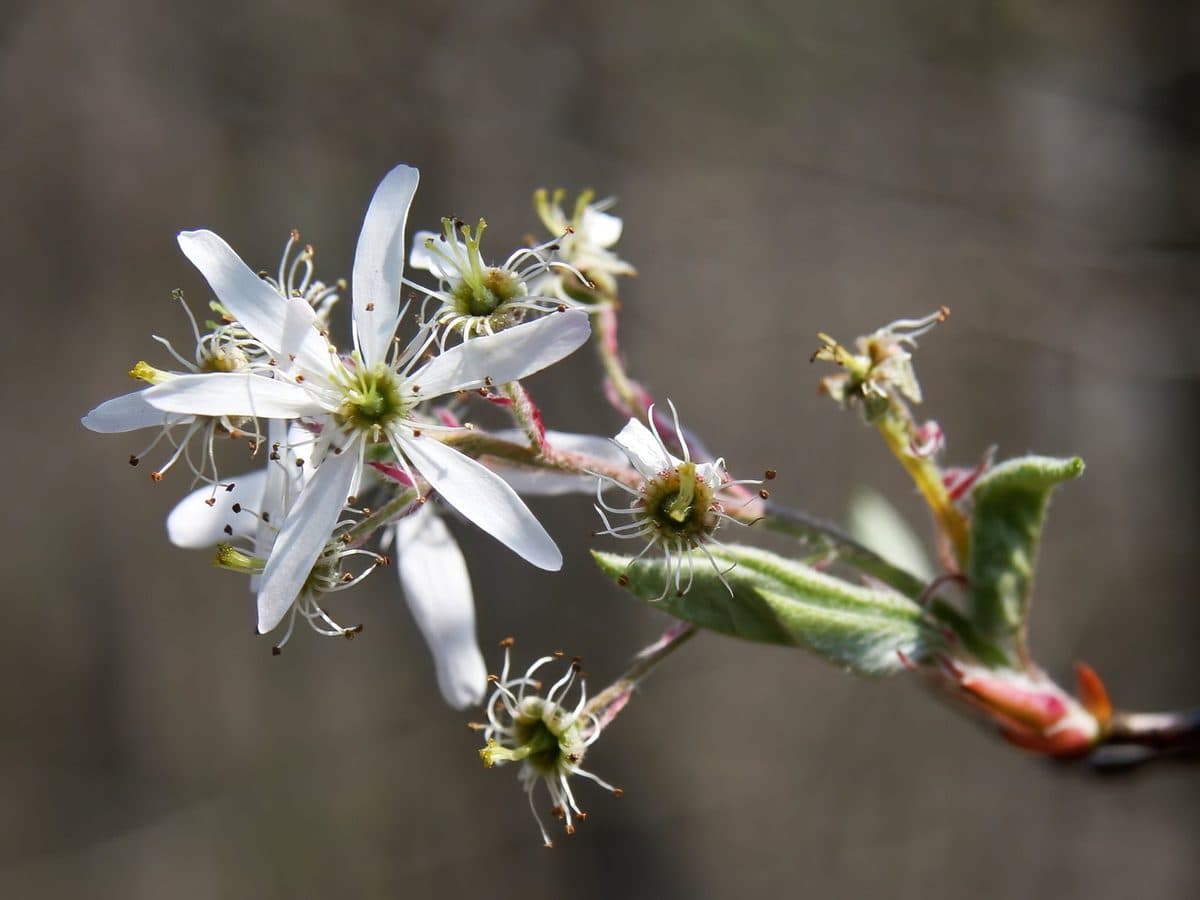
Downy serviceberry twig with star-like white flowers of five narrow petals beside unfolding, silvery-downy young leaves
Photo: Dcrjsr, CC BY 3.0

Downy serviceberry

Amelanchier arborea · Also called Serviceberry, Juneberry

15–25 ft tall · 15–25 ft wide

A small native tree with white flowers in early spring, berries in early summer and good fall color. UK's Urban Forest Initiative suggests serviceberry in place of ornamental pear.

  • Small yards
  • Near power lines
  • Spring flowers
  • Fall color
  • Wildlife
Look for
  • Drooping clusters of white flowers before the leaves in early spring
  • Small edible berries that ripen from red to purple-black in June
  • Good fall color
  • Often grows as a large, multi-stemmed shrub
Where it grows best

Full sun to part shade in well-drained soil; it tolerates clay and alkaline soil but not heavy air pollution.

Wildlife

Birds eat the berries very quickly once they ripen.

Good to know

Root suckers will make it shrubby unless they are removed.

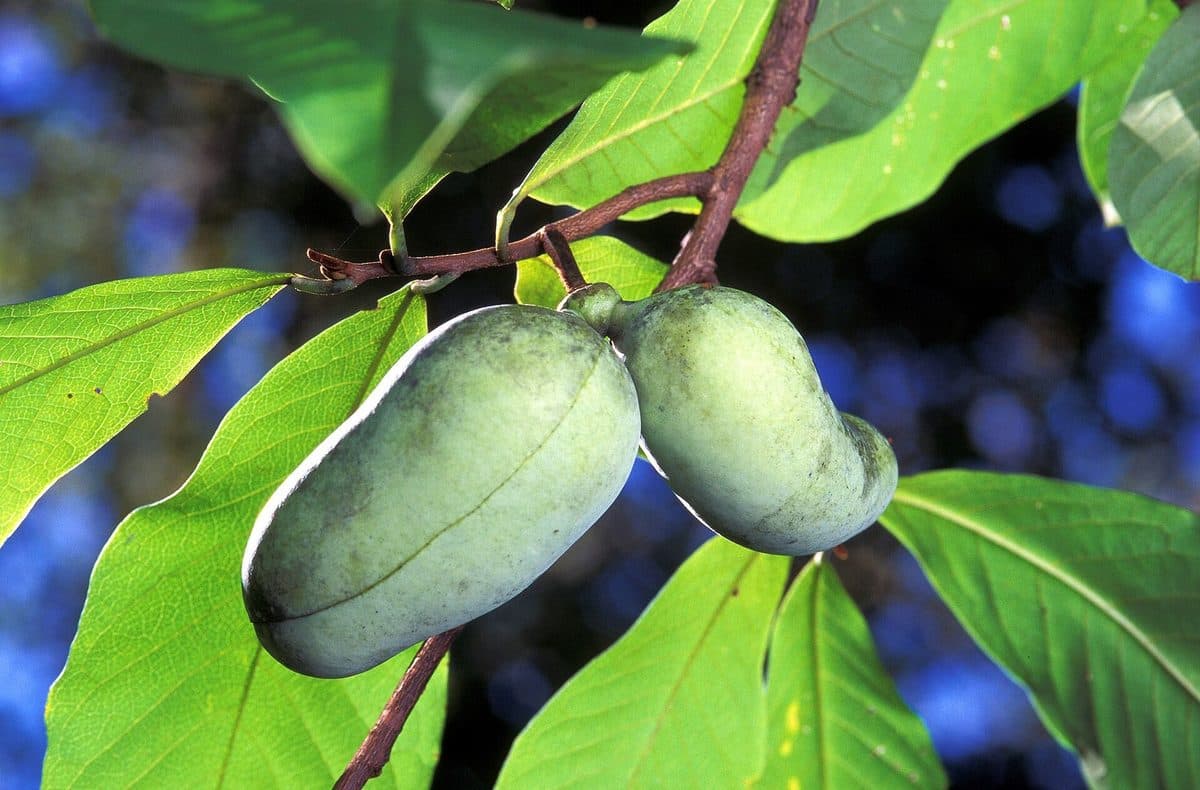
Two green pawpaw fruits hanging among large, smooth, drooping leaves
Photo: Scott Bauer, USDA Agricultural Research Service, Public domain

Pawpaw

Asimina triloba · Also called Paw paw

15–30 ft tall · 15–30 ft wide

A small understory tree with large leaves and edible fruit that tastes like a mix of banana and mango. It is a host plant for the zebra swallowtail butterfly.

  • Small yards
  • Near power lines
  • Wet sites
  • Wildlife
Look for
  • Large, drooping leaves 6–12 inches long
  • Dark maroon, star-like flowers in spring before the leaves
  • Green fruit that ripens in early fall
  • Spreads by root suckers to form groves
Where it grows best

Full sun to part shade in moist, fertile, well-drained soil, ideally slightly acidic; it is sensitive to drought.

Wildlife

Zebra swallowtail and pawpaw sphinx caterpillars feed on the leaves, and many birds and mammals eat the fruit.

Good to know

It spreads by suckers, does not transplant well and can be hard to find in nurseries.

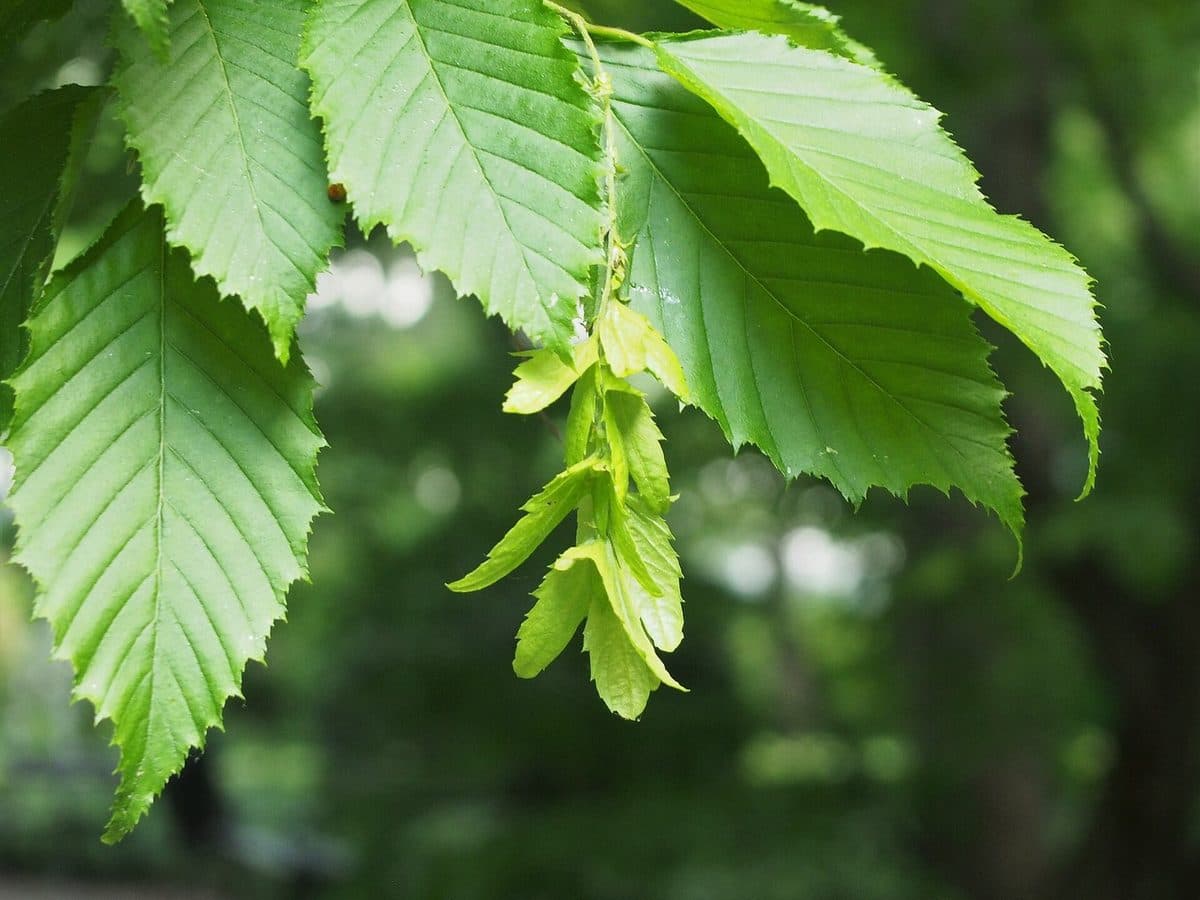
American hornbeam branch with toothed, pointed leaves and a hanging cluster of leafy three-lobed seed bracts
Photo: Agnieszka Kwiecień, Nova, CC BY-SA 4.0

American hornbeam

Carpinus caroliniana · Also called Musclewood

20–35 ft tall · 20–35 ft wide

A slow-growing understory tree with smooth gray bark that ripples like muscle. A low-maintenance choice for shady yards.

  • Small yards
  • Fall color
  • Wet sites
  • Wildlife
Look for
  • Smooth, blue-gray trunk with muscle-like ridges
  • Toothed, oval leaves that turn yellow, orange and red in fall
  • Clusters of small, winged nutlets
  • Rounded form
Where it grows best

Part shade to full shade in moist soil; it tolerates alkaline soil, clay and both wet and dry sites.

Wildlife

The Morton Arboretum lists it as attracting songbirds, game birds and small mammals.

Good to know

It does not transplant well, so plant a young tree in spring.

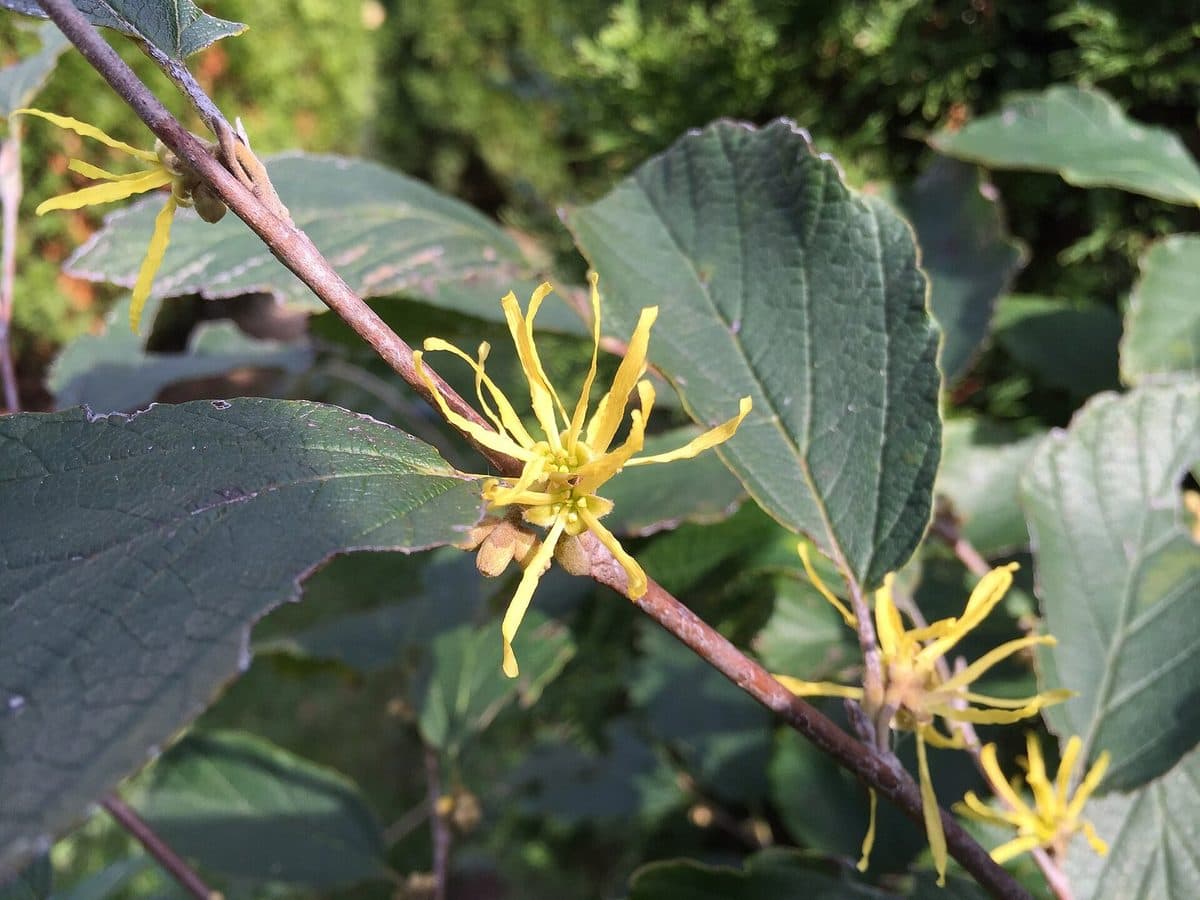
American witch-hazel twig with spidery yellow ribbon-petalled flowers among broad, wavy-toothed leaves
Photo: Famartin, CC BY-SA 4.0

American witch hazel

Hamamelis virginiana · Also called Common witch hazel

15–20 ft tall · 15–20 ft wide

A large native shrub or small tree that flowers in late fall, after most plants are done. It suits woodland edges and yard borders.

  • Small yards
  • Near power lines
  • Fall color
  • Wildlife
Look for
  • Fragrant, yellow, ribbon-like flowers from October to December
  • Rounded, wavy-edged leaves that turn yellow in fall
  • Woody seed capsules that shoot seeds up to 30 feet
  • Irregular, spreading branches
Where it grows best

Full sun to part shade, with the best flowering in sun, in moist soil; it tolerates clay, alkaline soil and road salt.

Wildlife

Birds eat the seeds, and it is a host plant for spring azure butterfly caterpillars.

Good to know

Remove suckers to keep it from spreading.

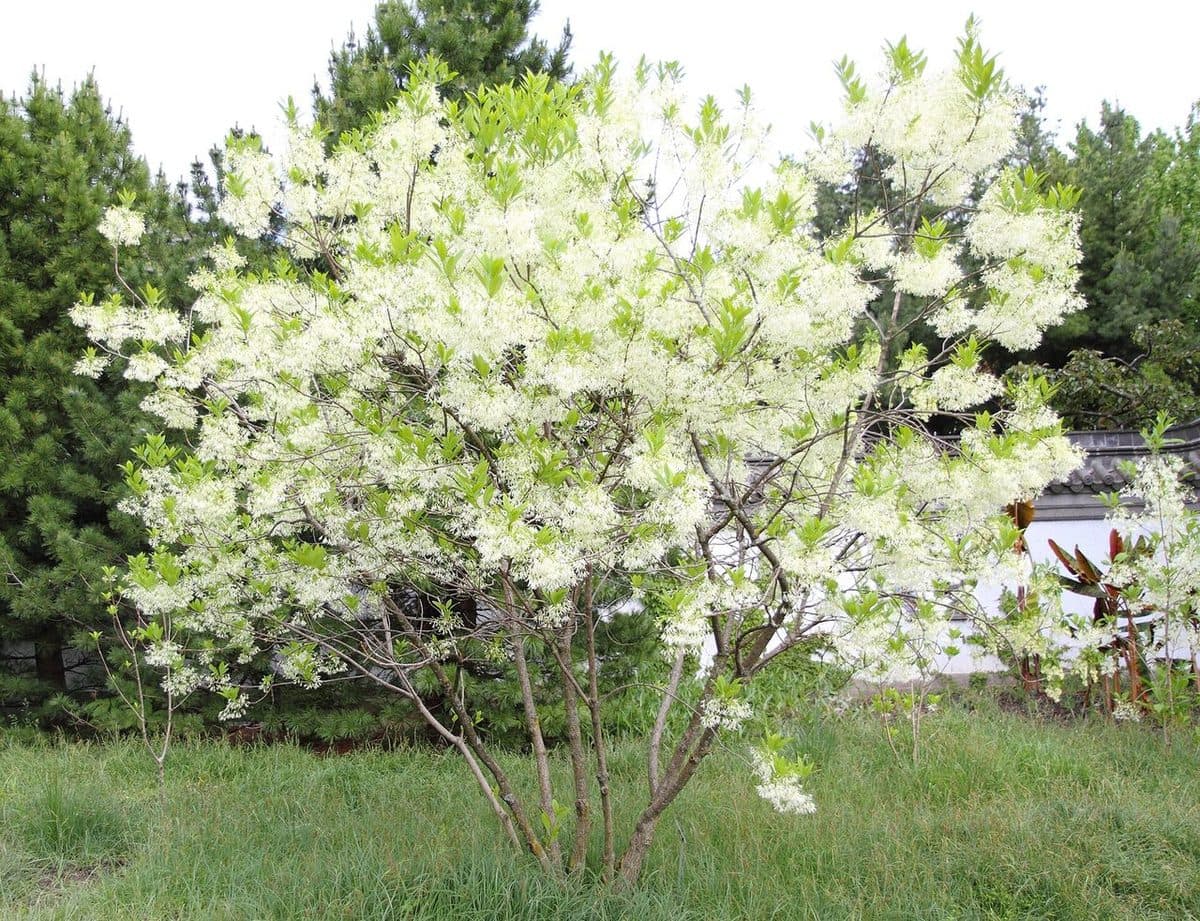
Fringetree in full bloom, a small multi-stemmed tree covered in white, fringe-like flower clusters
Photo: Cephas, CC BY-SA 3.0

Fringetree

Chionanthus virginicus · Also called White fringetree, Old man's beard

12–20 ft tall · 12–20 ft wide

A small native tree with clouds of fragrant, fringe-like white flowers in late spring. It fits small yards and spaces under utility lines.

  • Small yards
  • Near power lines
  • Spring flowers
  • Wildlife
Look for
  • Drooping clusters of fragrant, strap-like white petals in May and June
  • Male trees have showier flowers; female trees bear dark blue fruit in late summer
  • Large leaves, up to 8 inches long, that turn yellow in fall
Where it grows best

Full sun to part shade in moist, well-drained soil; it tolerates clay, road salt and urban air pollution but not long dry spells.

Wildlife

Birds eat the fruit on female trees.

Good to know

It can be hard to find in nurseries.

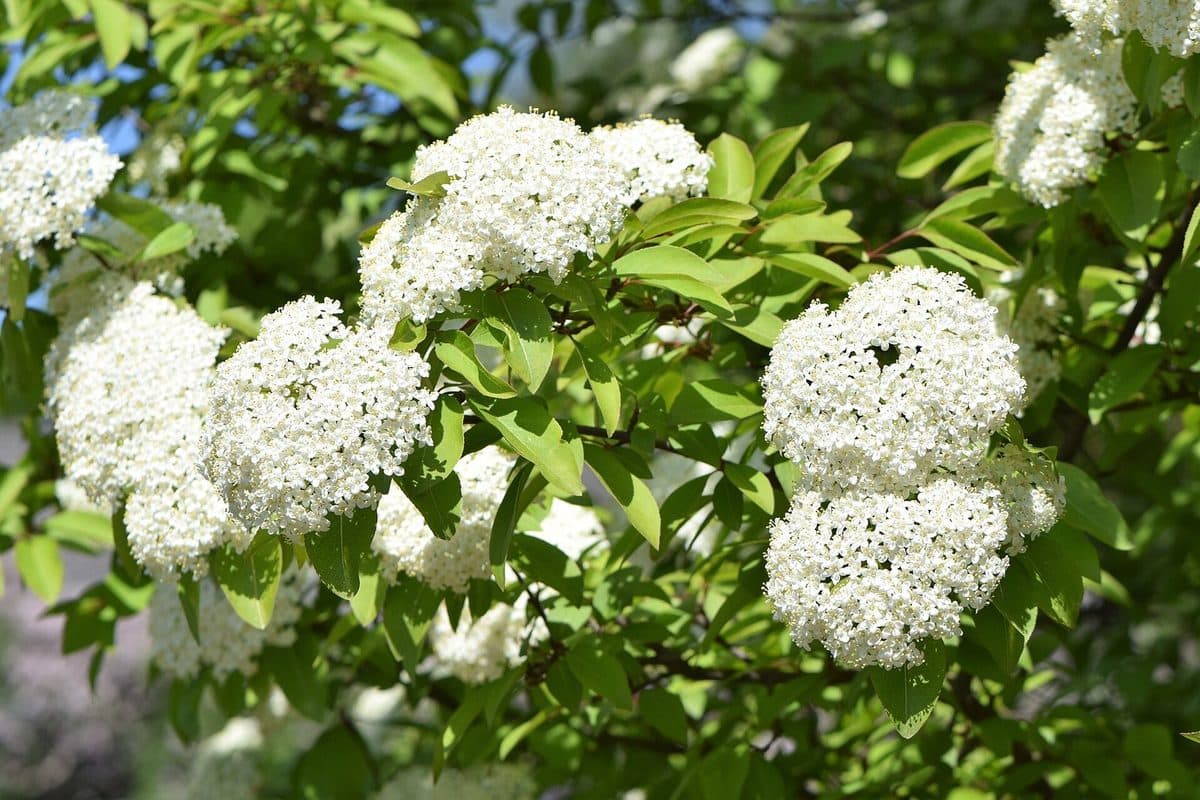
Blackhaw branch with flat-topped clusters of tiny white flowers among glossy, finely toothed oval leaves
Photo: Krzysztof Ziarnek, Kenraiz, CC BY-SA 4.0

Blackhaw

Viburnum prunifolium · Also called Blackhaw viburnum, Smooth blackhaw

12–15 ft tall · 6–12 ft wide

A native large shrub or small tree with white spring flowers, dark blue fruit and red-purple fall color. It is tough enough for dry, clay and alkaline soils.

  • Small yards
  • Near power lines
  • Dry sites
  • Spring flowers
  • Fall color
  • Wildlife
Look for
  • Flat-topped clusters of creamy white flowers in spring
  • Blue-black fruit in fall that often lasts into winter
  • Glossy leaves that turn red to purple in fall
  • Can be grown as a multi-stemmed shrub or a single-trunk tree
Where it grows best

Full sun to part shade; it tolerates alkaline soil, clay, drought and both wet and dry sites.

Wildlife

Many bird species eat the fruit and use the plant for shelter.

Good to know

It suckers, so remove shoots if you want a single trunk, and prune right after flowering.

Why ash isn't on this list

Ash trees are native to Kentucky, but the emerald ash borer, an invasive beetle from Asia, has killed millions of ash trees across the United States. It was first found in Kentucky in 2009, was reported in Mercer County in 2015, and had reached at least 103 of the state's 120 counties by the end of 2022, with new western Kentucky counties still being confirmed in 2025. UK Extension advises replacing lost ash with a mix of tree species, so this list does not include ash.

Invasive trees to avoid

These trees aren't native to Kentucky and spread aggressively. Don't plant them, and consider replacing any you have with a native tree.

Spotted lanternfly

Spotted lanternfly is an invasive insect that prefers to feed on tree-of-heaven, and it also feeds on grapes, maples, walnuts and dozens of other plants. As of late July 2026, UK Extension listed it in 18 Kentucky counties, including neighboring Anderson and Woodford counties; Mercer County was not on the list. If you see one in Mercer County, email a photo and the location to reportapest@uky.edu.

Callery pear in Kentucky

Callery pear can still be sold and planted in Kentucky: there is no statewide ban as of 2026. Some Kentucky communities hold Bradford pear bounty events, where people who cut down a Callery pear receive free native trees in exchange. The University of Kentucky helped start them in Franklin County in 2022.
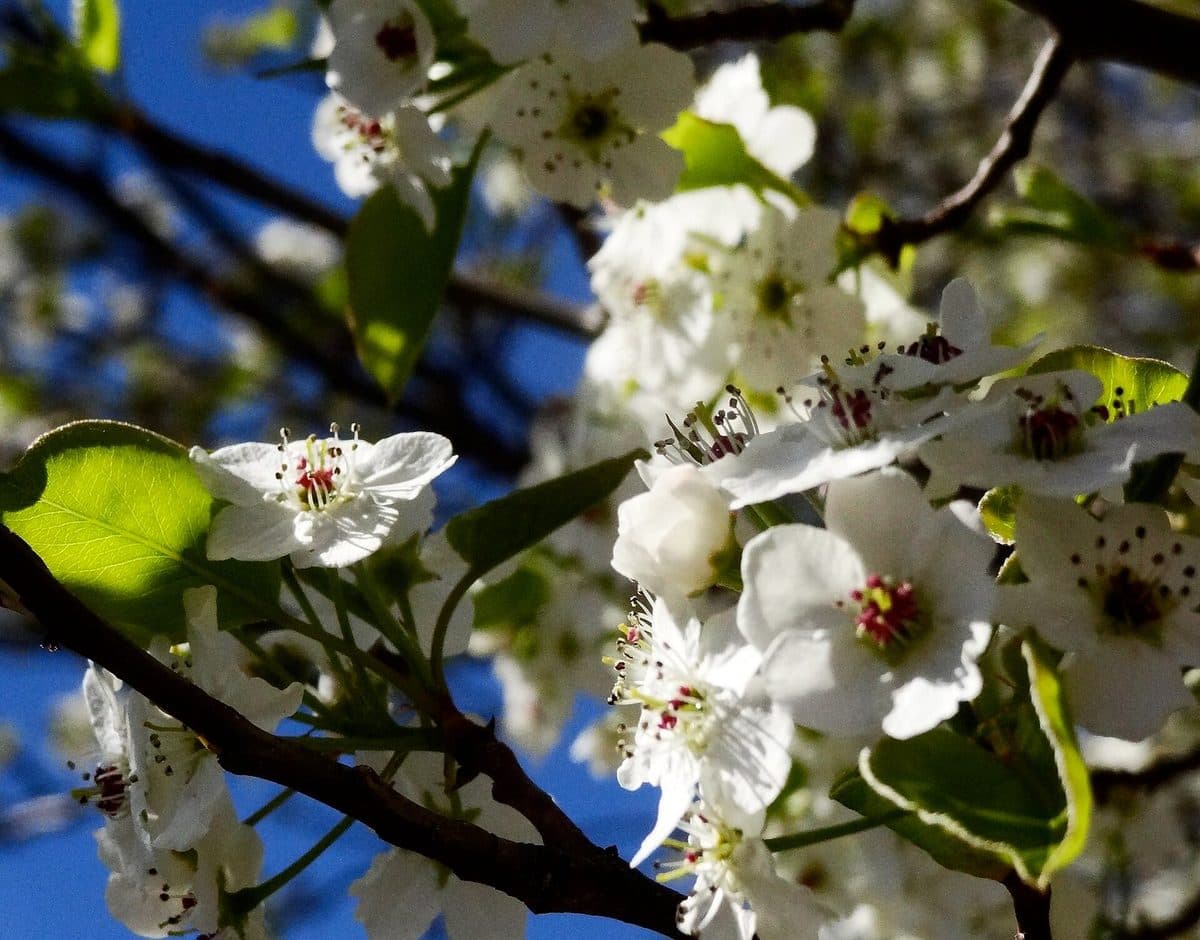
Callery pear blossoms: clusters of white five-petalled flowers with dark red anthers among glossy new leaves
Photo: Rizka, CC BY-SA 4.0
Severe threatNative to China and Korea

Callery pear

Pyrus calleryana · Also called Bradford pear, ornamental pear

A fast-growing flowering tree that was planted widely in yards and along streets. Planted trees cross-pollinate and seed into fields, roadsides and woods, where they form thorny thickets.

How to recognize it

  • Leaves are glossy, rounded to teardrop-shaped, about 3 inches across, with finely toothed, wavy edges.
  • Masses of white flowers in early spring, before most trees leaf out, with a strong unpleasant smell.
  • Small, hard, round fruits about 1/2 inch across, in clusters.
  • Wild seedlings often have sharp thorns up to 3 inches long.

Native flowering dogwood and viburnums also bloom white in spring, but their leaves grow in opposite pairs; Callery pear leaves alternate along the twig.

Why it's a problem

Wild offspring form dense thorny stands that crowd out native plants, and almost no caterpillars feed on them, which leaves less food for songbirds. The branching is weak, so limbs break in wind and ice storms.

What to do

Do not plant it. Seedlings and small trees can be pulled if all the roots come out, but cut trees resprout unless the stump is treated, so for larger trees ask the county Extension office or a certified arborist.

Plant a native instead

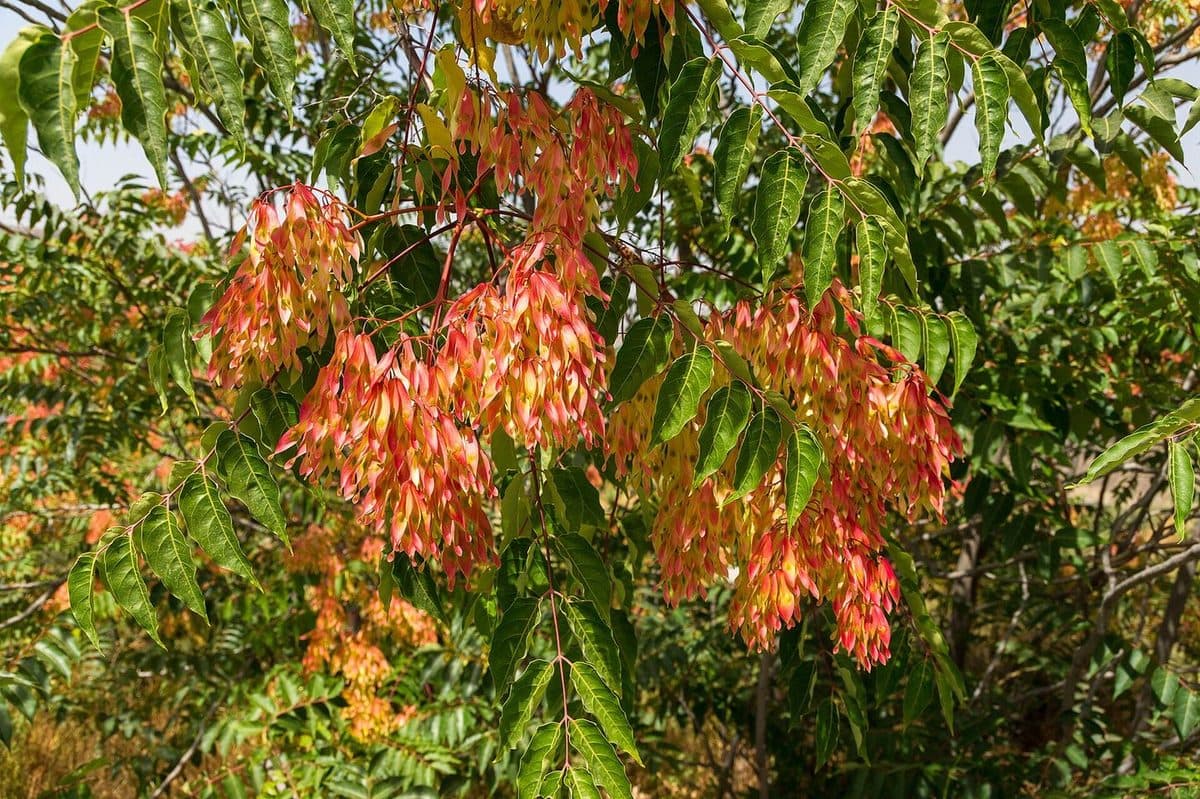
Tree-of-heaven branches loaded with clusters of red-orange winged seeds among long compound leaves
Photo: Jebulon, CC0
Severe threatNative to China and Taiwan

Tree-of-heaven

Ailanthus altissima · Also called Ailanthus, stink tree

One of the fastest-growing trees in North America, common along roads, fences and vacant lots. It is also the preferred host of the spotted lanternfly, which has reached counties next to Mercer.

How to recognize it

  • Very large compound leaves, up to about 3 feet long, with 15 to 41 leaflets.
  • Leaflet edges are smooth except for one or two small gland-tipped teeth near the base.
  • Crushed leaves and broken twigs have a strong, unpleasant smell.
  • Large clusters of papery, winged seeds; bark is thin and smooth.

Native black walnut and sumacs have teeth along the whole leaflet edge; walnut bears round husked nuts and staghorn sumac has upright clusters of fuzzy red fruit.

Why it's a problem

It spreads by abundant wind-blown seed and by root sprouts, and can take hold along roads, trails and forest openings. Adult spotted lanternflies prefer to feed on it.

What to do

Do not plant it. Young seedlings can be pulled when the soil is moist if all the root comes out, but cutting a larger tree causes dozens of stump and root sprouts, so ask the county Extension office or a certified arborist before removing one.

Plant a native instead

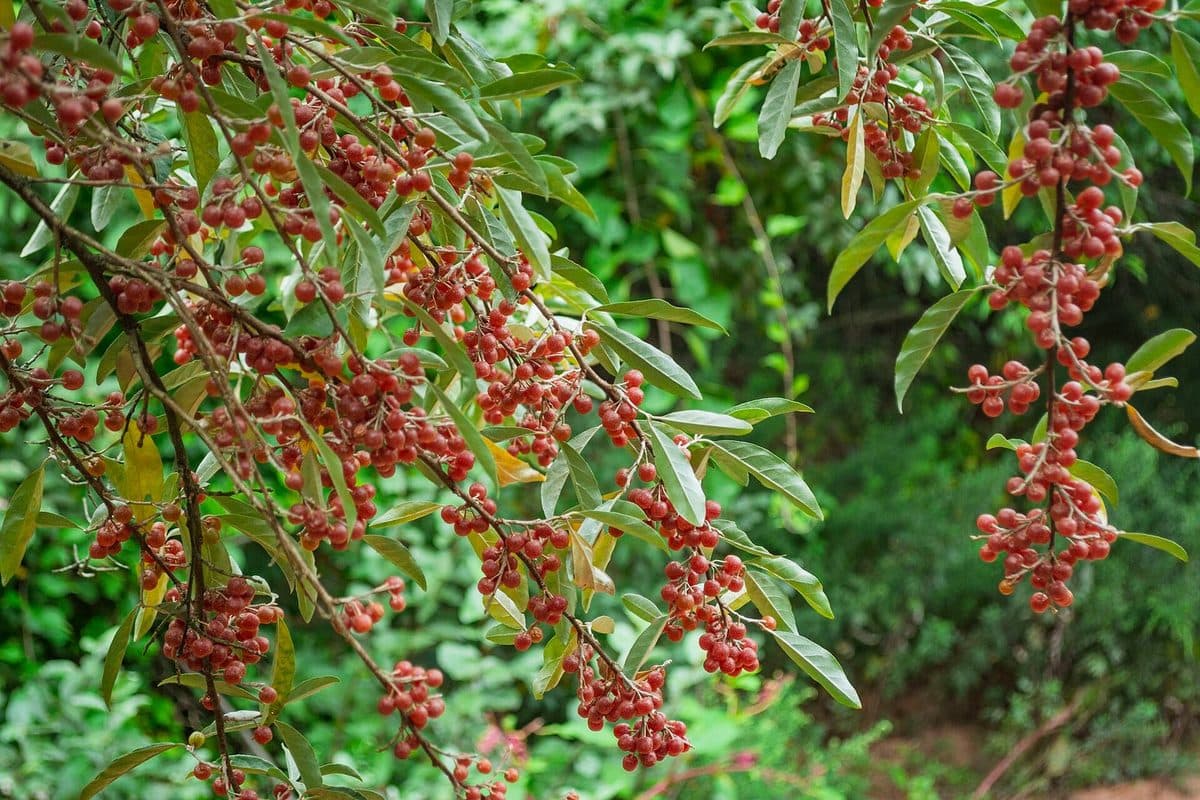
Autumn olive branches heavy with small speckled red berries among narrow silvery-green leaves
Photo: Ethan Long, CC BY-SA 2.0
Severe threatNative to Asia

Autumn olive

Elaeagnus umbellata

A large shrub, up to 20 feet tall, that can look like a small tree. It was once promoted for erosion control and wildlife, and now forms dense stands in fields, roadsides and woods.

How to recognize it

  • Leaves are dark green on top with a distinctly silvery underside.
  • Small clusters of fragrant, pale yellow, tube-shaped flowers in April and May.
  • Plenty of small red berries in fall, dotted with tiny silvery or brown scales.
  • Many stems from the base; twigs are silvery or golden brown, often with spines.

Russian olive, a close relative, has narrower leaves that are silvery on both sides and yellow-brown fruit.

Why it's a problem

It works with soil bacteria to fix nitrogen, which helps it outgrow and shade out native plants. A large plant can make up to 66,000 seeds a year, spread by birds, and its berries are less nutritious than native fruits.

What to do

Do not plant it. Small seedlings can be pulled when the soil is moist if the whole root comes out; mowing or cutting alone makes it grow back denser, so contact the county Extension agent or a Kentucky Division of Forestry forester for larger plants.

Plant a native instead

  • Wild plum
  • American hazelnut
  • Winterberry
  • Spicebush
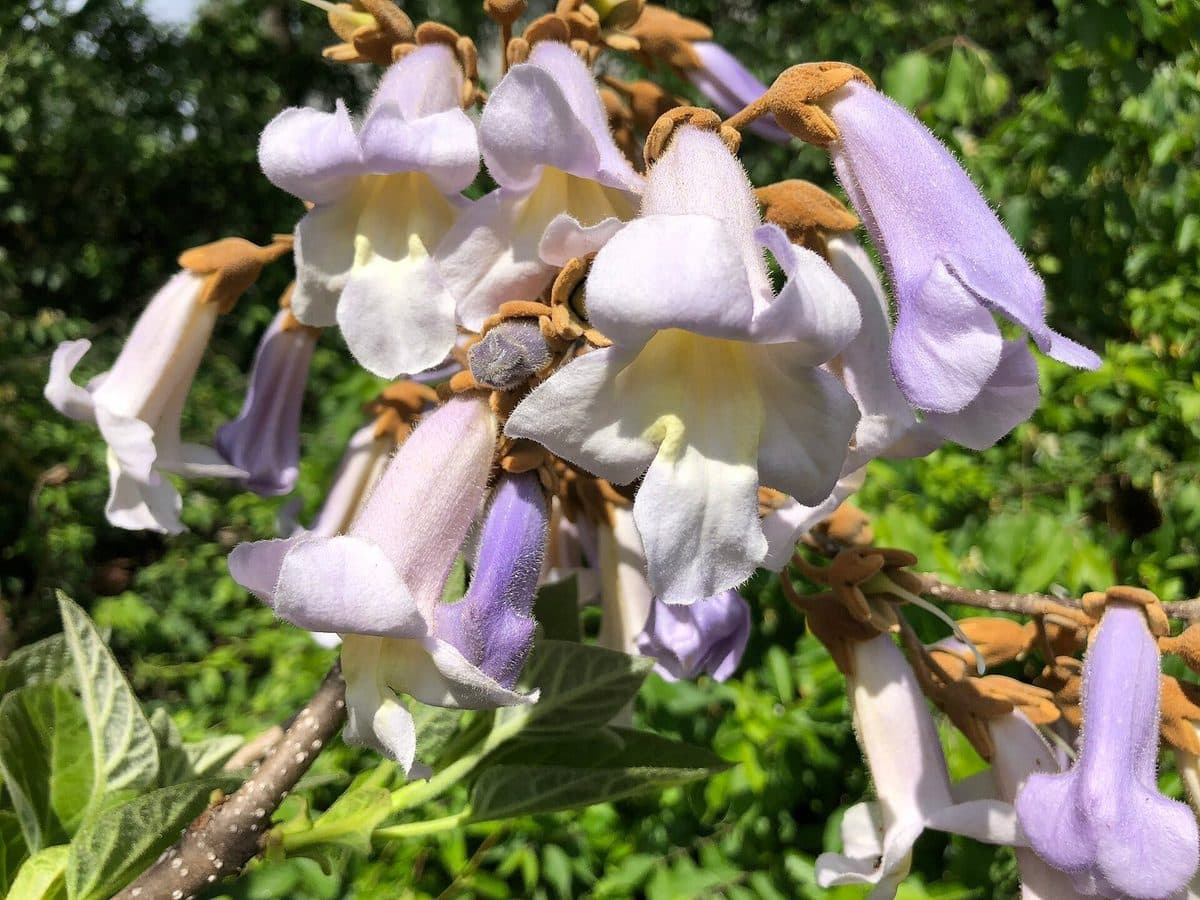
Princess tree flower cluster: pale violet, foxglove-like trumpets with creamy throats and brown fuzzy buds
Photo: Famartin, CC BY-SA 4.0
Severe threatNative to China

Princess tree

Paulownia tomentosa · Also called Empress tree, Royal paulownia

A fast-growing ornamental tree with huge leaves and purple spring flowers. It has escaped cultivation across the Southeast and Midwest, including Kentucky.

How to recognize it

  • Very large, heart-shaped leaves, 6 to 12 inches long on mature trees and larger on young sprouts.
  • Upright clusters of fragrant purple flowers, 6 to 12 inches long, in late April or early May before the leaves open.
  • Oval seed capsules 1 to 2 inches long, packed with tiny winged seeds; dry brown capsules stay on the tree through winter.
  • Thin, flaky bark; stout but brittle branches with hollow or chambered pith.

Why it's a problem

Each capsule holds thousands of tiny wind-blown seeds that sprout in forest gaps and edges, streambanks, roadsides and fencerows. It sprouts from stems and roots, so it is hard to get rid of.

What to do

Do not plant it. Because it resprouts from stems and roots, cutting alone rarely kills it; ask the county Extension office or a certified arborist about removal.

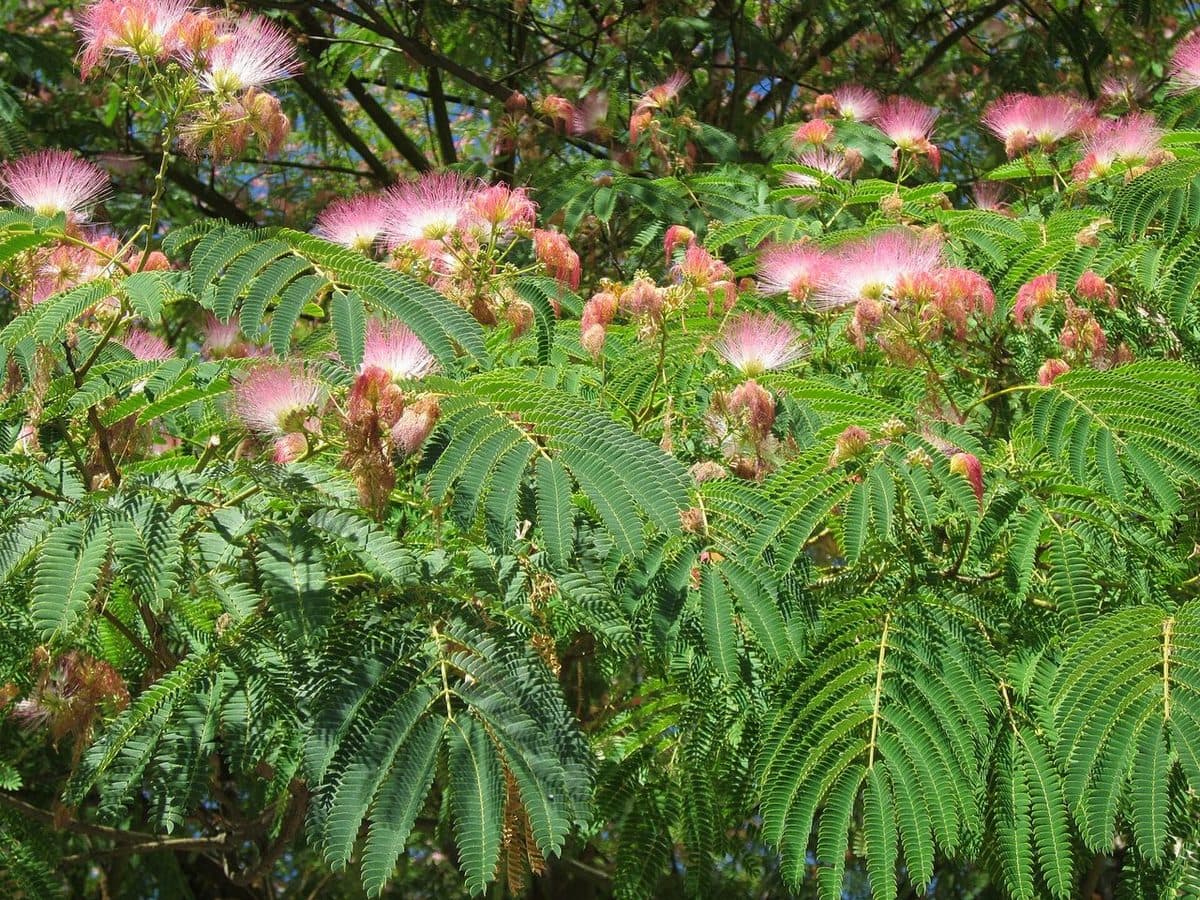
Mimosa tree with pink powder-puff flowers above feathery, fern-like leaves
Photo: AnRo0002, CC0
Significant threatNative to Asia, from Iran to Japan

Mimosa

Albizia julibrissin · Also called Silk tree, Silktree

A small ornamental tree with feathery leaves and pink powder-puff flowers, planted in the U.S. since the late 1700s. It seeds into disturbed ground and along streams.

How to recognize it

  • Feathery, fern-like leaves, 4 to 20 inches long, divided into many small leaflets.
  • Fluffy pink flower heads in clusters at the ends of branches.
  • Flat seed pods 3 to 8 inches long, holding several hard-coated seeds.
  • Thin, nearly smooth bark.

Why it's a problem

It invades streamside areas, spreads along stream networks, and can reduce native plants and young hardwood trees. Cut trees sprout back, sometimes more than 3 feet in one season.

What to do

Do not plant it. One cutting will not kill it, since repeated cutting or cutting plus treatment is needed, so ask the county Extension office or a certified arborist about removal.

Plant a native instead

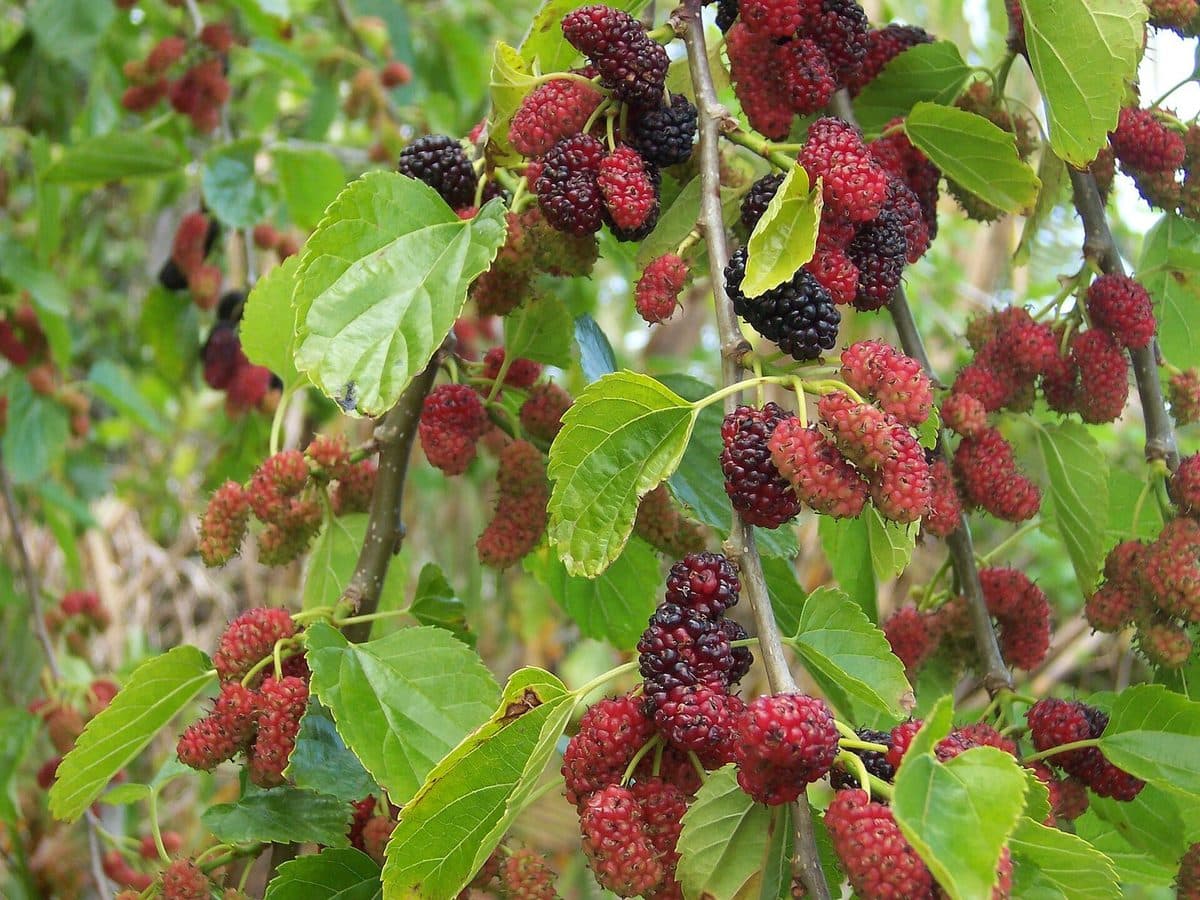
White mulberry branches with clusters of red and dark purple ripening fruit among glossy toothed leaves
Photo: B.navez, CC BY-SA 3.0
Significant threatNative to China

White mulberry

Morus alba

A fruiting tree brought to North America in the 1600s to feed silkworms. Birds spread its seeds into fencerows, roadsides, old fields and floodplains.

How to recognize it

  • Leaves 2 to 4 inches long; shapes vary on the same tree, from unlobed to deeply lobed, with coarse teeth.
  • Broken leaves ooze a milky sap.
  • Fruits look like small blackberries, 1/2 to 1 inch long, and ripen white, purple or black.
  • Bark is shallowly furrowed with long, narrow ridges.

Native red mulberry looks similar, and the two cross, so some trees are hard to identify; ask the county Extension office for help.

Why it's a problem

It hybridizes with native red mulberry, and the hybrids favor the white mulberry parent, which could lead to local loss of the native tree. Birds and other animals carry its seeds long distances.

What to do

Do not plant it. If you think you have one, have it identified by the county Extension office, and ask Extension or a certified arborist about removal.

Plant a native instead

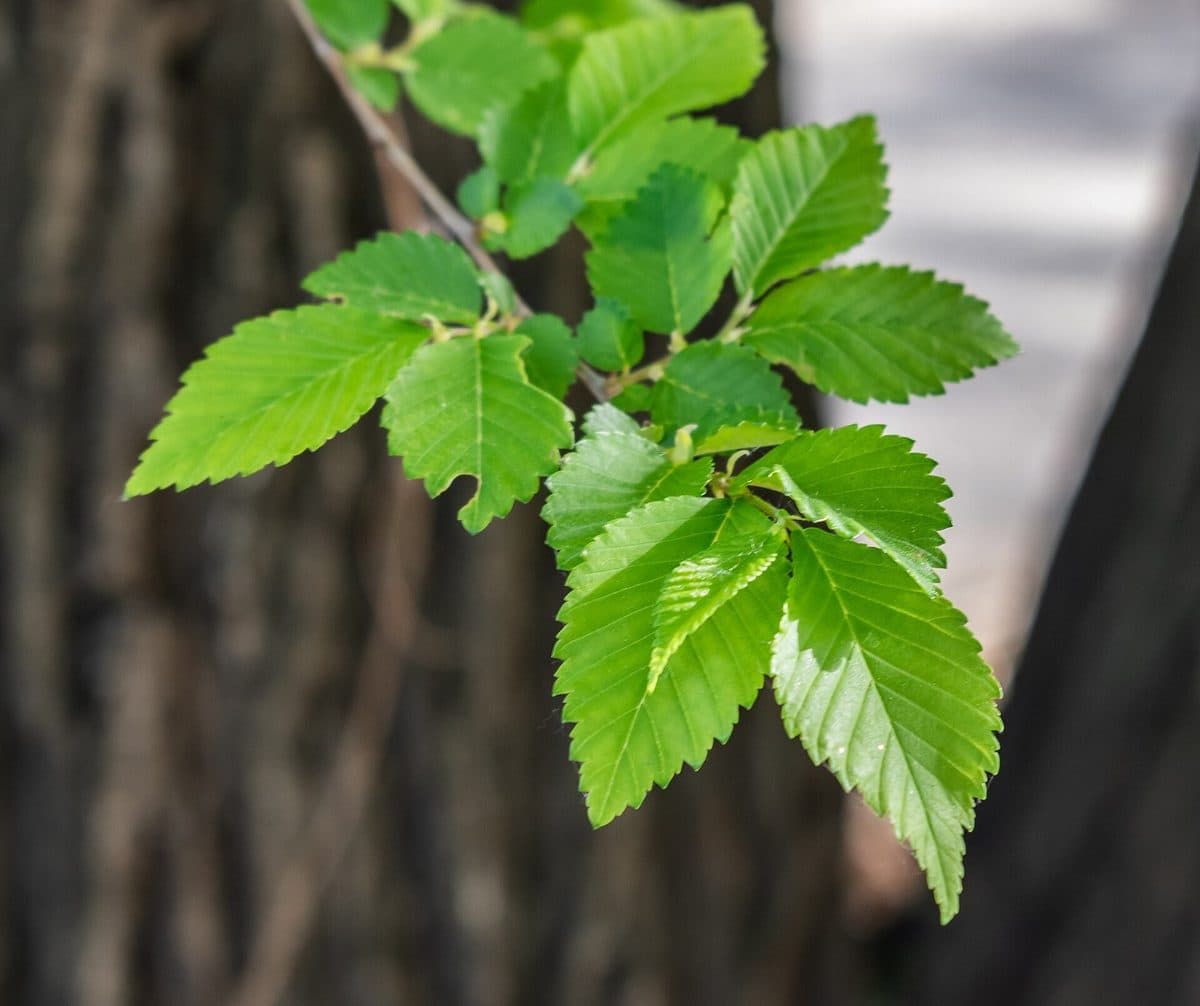
Siberian elm twig with small, oval, evenly toothed leaves against a dark trunk
Photo: Tournasol7, CC BY 4.0
Significant threatNative to Asia

Siberian elm

Ulmus pumila

A hardy, fast-seeding elm once planted for windbreaks and shade. It takes hold quickly on roadsides, grasslands and along waterways.

How to recognize it

  • Small leaves, 1 to 2 inches long, elliptic, toothed and short-pointed.
  • Small light green to reddish flowers without petals, in early spring before the leaves.
  • Round, flat, papery seeds in hanging clusters, spread by wind.
  • Silver-gray twigs zigzag between buds; mature bark is dark gray with shallow grooves.

Native American elm and slippery elm have much larger leaves, about 3 inches long, compared with under 2 inches for Siberian elm.

Why it's a problem

Its seeds sprout readily and it establishes fast where vegetation is sparse. It can take over disturbed grasslands in a few years.

What to do

Do not plant it. Seedlings can be hand-pulled; for larger trees, ask the county Extension office or a certified arborist.

Plant a native instead

  • Sugarberry
  • Rock elm
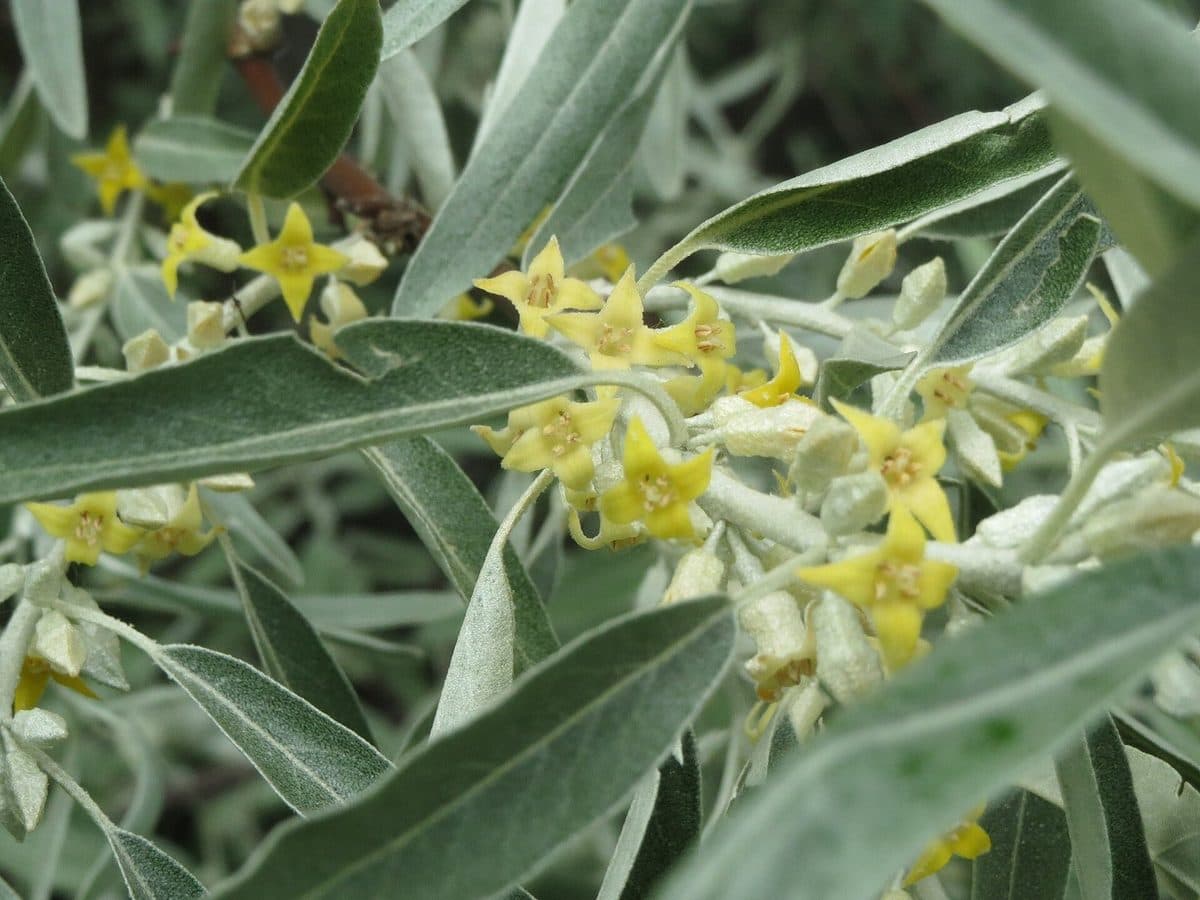
Russian olive twig with small yellow star-shaped flowers among long, narrow, silvery leaves
Photo: AnRo0002, CC0
Moderate threatNative to southern Europe and central and western Asia

Russian olive

Elaeagnus angustifolia

A silvery shrub or small tree planted as an ornamental and for windbreaks. It is a major invader of western riverbanks, and in Kentucky it mostly stays in disturbed areas.

How to recognize it

  • Narrow, lance-shaped leaves at least three times as long as wide, silvery on both sides.
  • Small fragrant flowers in clusters where the leaves meet the stem.
  • Yellow-brown, olive-like fruit with one large seed.
  • Coarse thorns on branches; dark bark that is smooth or shredding.

Autumn olive, a close relative, has leaves that are green on top and silvery only underneath, and red fruit.

Why it's a problem

It spreads by bird- and animal-eaten fruit and sprouts from roots and the base of the trunk. KY-IPC ranks it a moderate threat because it mainly spreads along disturbed corridors here.

What to do

Do not plant it. It sprouts from its roots and base after cutting, so ask the county Extension office or a certified arborist about removal.

Plant a native instead

  • Wild plum
  • American hazelnut
  • Spicebush

Invasive shrubs and vines to watch

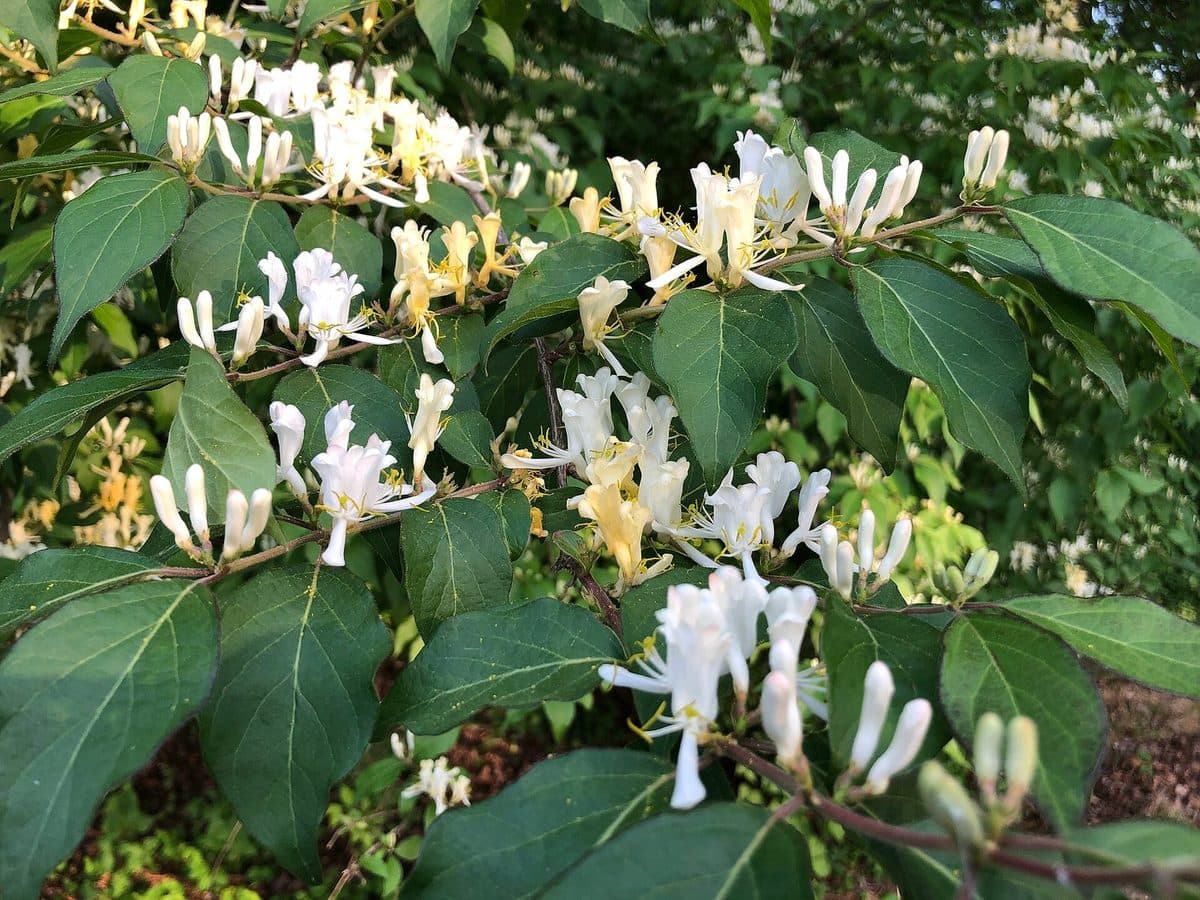
  • Amur honeysuckle shrub with pairs of white and pale-yellow tubular flowers along leafy stems
    Photo: Famartin, CC BY-SA 4.0

    Amur honeysuckle

    Lonicera maackii

    Also called bush honeysuckle, it is the most common invasive honeysuckle shrub in Kentucky. It forms thickets that cut off light and moisture to native plants, and a large shrub can produce more than a million seeds that birds spread.

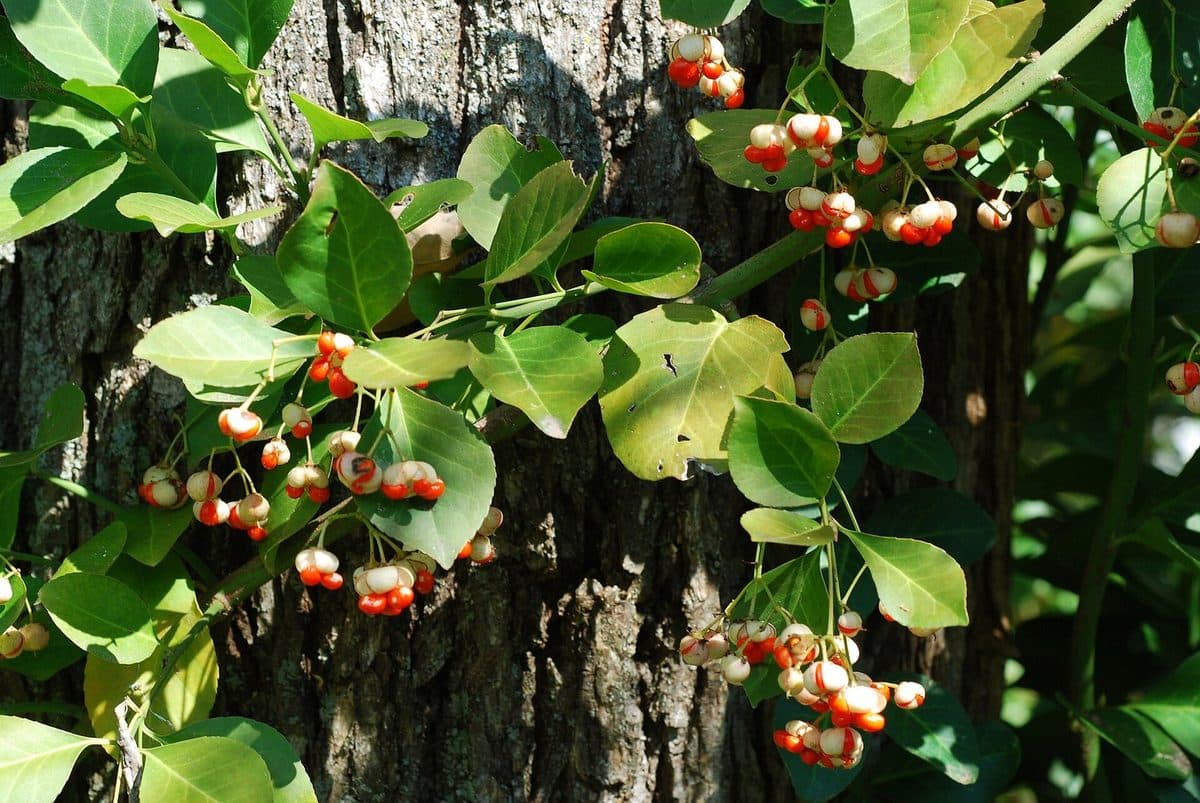
  • Wintercreeper vine climbing a tree trunk, with glossy oval leaves and orange-red seeds bursting from pale capsules
    Photo: DouglasGoldman, CC BY-SA 4.0

    Wintercreeper

    Euonymus fortunei

    An evergreen ornamental from China. It forms dense ground cover that crowds out wildflowers, and it can climb 40 to 70 feet into trees.

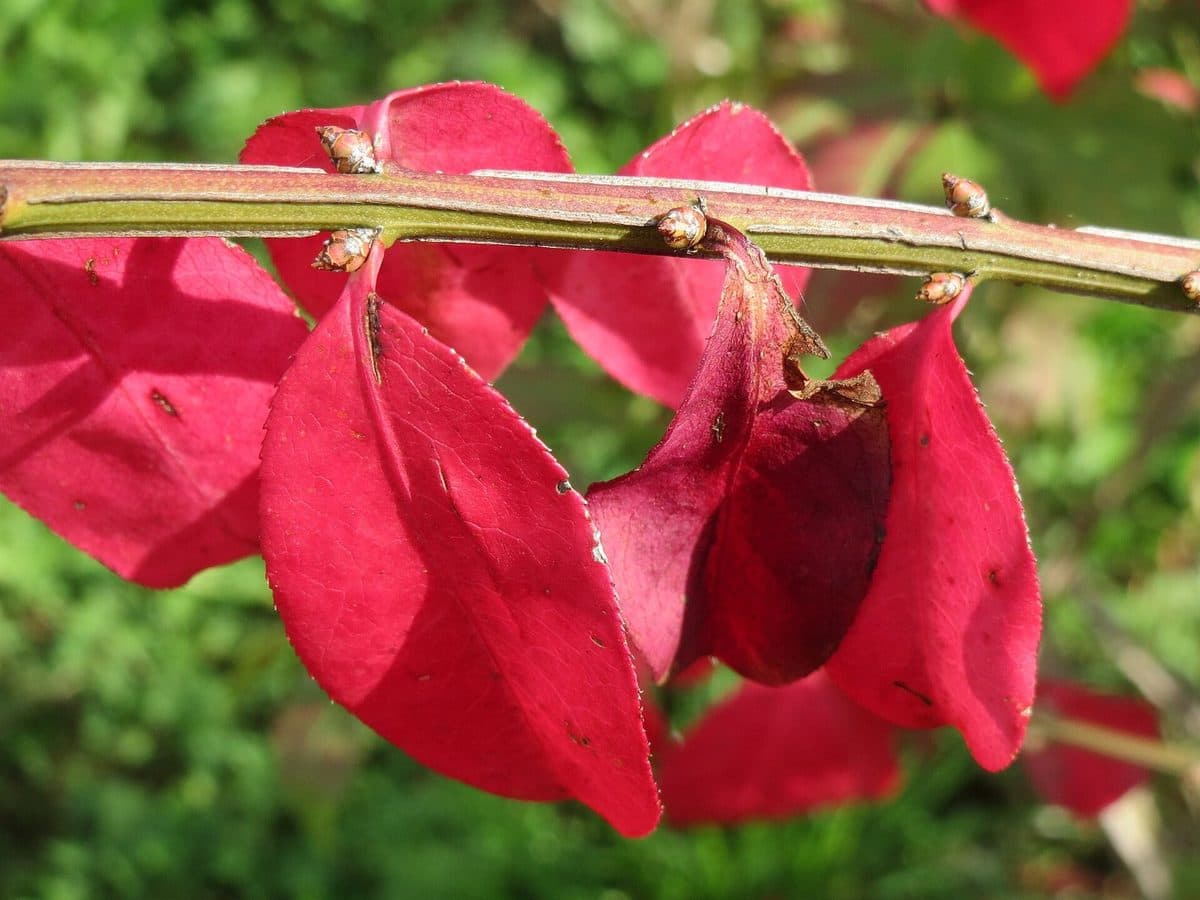
  • Winged burning bush stem with thin corky ridges along its sides, above bright red autumn leaves
    Photo: AnRo0002, CC0

    Winged burning bush

    Euonymus alatus

    A common landscape shrub. Birds eat and spread its seeds, and the Kentucky Division of Forestry lists it among the state's 10 worst invasive plants.

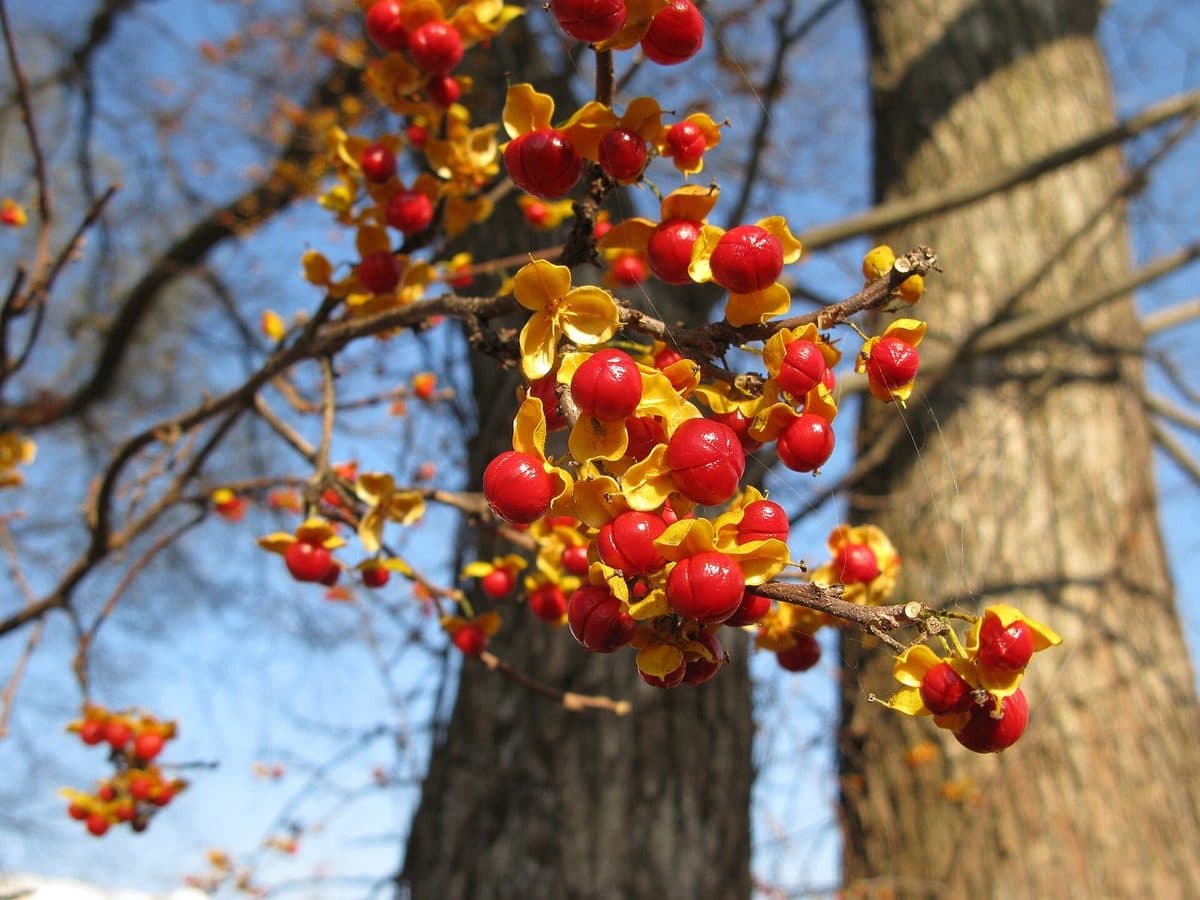
  • Oriental bittersweet vine hung with red berries in split yellow-orange husks, climbing beside a tree trunk
    Photo: Qwert1234, Public domain

    Oriental bittersweet

    Celastrus orbiculatus

    A fast-growing woody vine that spreads by seed and by root suckers. The Kentucky Division of Forestry calls it a serious threat to native plant communities.

Report invasive plants

Report invasive plants on EDDMapS (eddmaps.org), the free mapping site the Kentucky Invasive Plant Council uses, or email the council at KYinvasiveplants@gmail.com. For help identifying a plant, contact the Mercer County Extension Office at (859) 734-4378 or a Kentucky Division of Forestry forester.

Sources (102)